Instagram ad copy can make or break your campaign. While visuals grab attention, it's the words that drive action. This guide shares how to write effective Instagram ad copy by focusing on:
- Character limits: 125 characters for Feed ads, 72 for Reels, and concise messaging for Stories.
- Key techniques: Use emotional triggers, urgency, and the Problem-Agitate-Solve (PAS) formula to connect with your audience.
- Headlines: Lead with benefits or a bold question; keep it under 40 characters.
- CTAs: Use direct, action-oriented phrases like "Shop Now" or "Learn More."
- Format-specific tips: Tailor your copy for Carousels, Reels, Stories, and Shopping ads.
With 60% of users discovering new products on Instagram and 29% of businesses ranking it as their top ROI platform, nailing your ad copy is critical. Test different versions using A/B testing, track performance metrics using top PPC tools, and align your copy with audience needs to maximize results.
Instagram's Ad Copy Guidelines
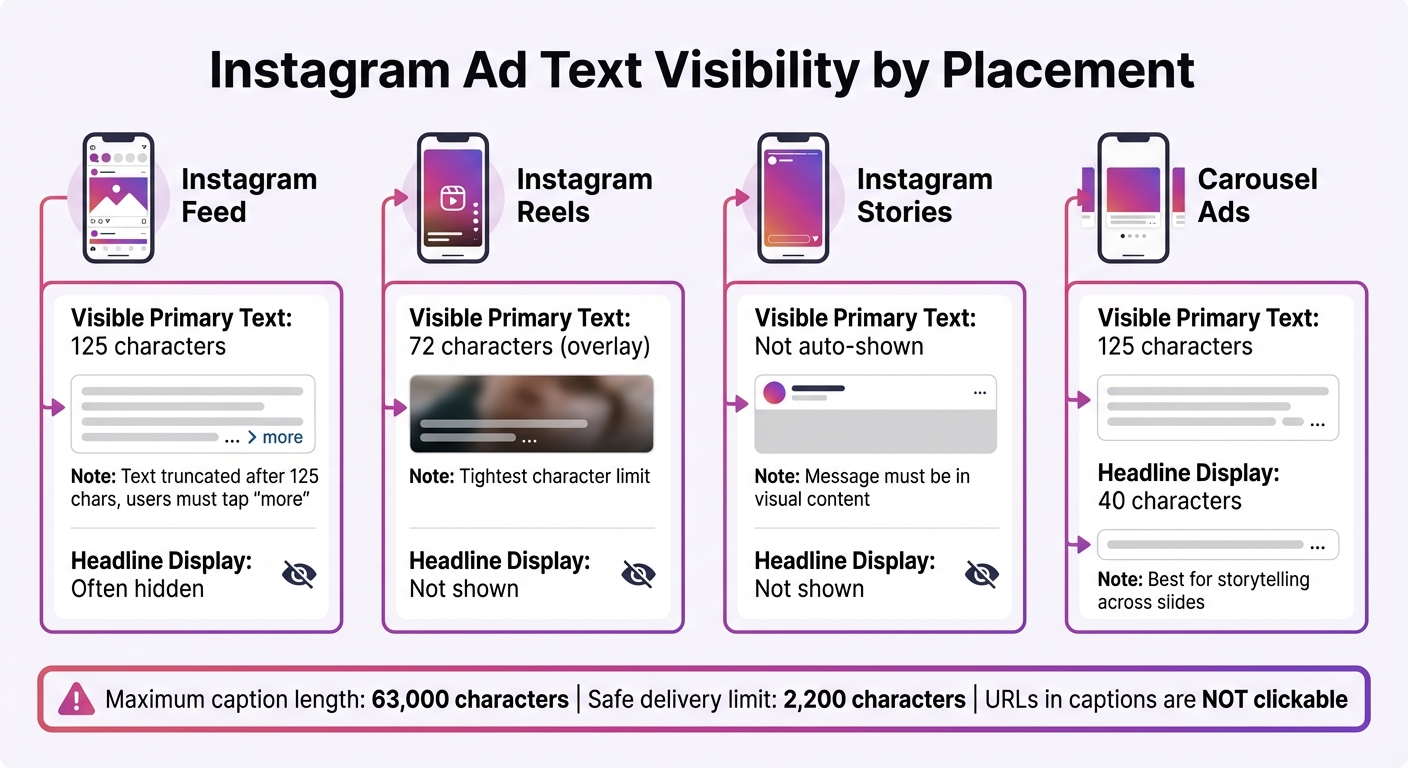
Instagram Ad Text Limits and Visibility by Placement
To craft effective Instagram ads, it's important to understand the platform's technical requirements. These guidelines dictate how your copy is displayed and whether your ad gets approved. Following these rules is key to both compliance and PPC campaign optimization.
Text Length and Formatting Rules
Instagram allows up to 63,000 characters for Feed ad captions, but here's the catch: after 125 characters, the text is truncated in most placements. Users need to tap "more" to see the rest, but most won’t bother. For Reels ads, the limit is even tighter - only 72 characters are visible as an overlay before expansion is needed. Stories, on the other hand, don’t display primary text automatically, so your message must be embedded in the visual content.
Here’s a quick breakdown of text visibility across placements:
| Ad Placement | Visible Primary Text | Headline Display |
|---|---|---|
| Instagram Feed | 125 characters | Often hidden |
| Instagram Reels | 72 characters (overlay) | Not shown |
| Instagram Stories | Not auto-shown | Not shown |
| Carousel Ads | 125 characters | 40 characters |
A crucial point to remember: URLs in captions are not clickable. The only way users can access a link is through the dedicated CTA button. Including a URL in your caption wastes space and serves no functional purpose. Additionally, if your caption exceeds 2,200 characters, it may not deliver properly on Instagram, even if it works on Facebook.
Compliance with Instagram Policies
Instagram’s advertising policies emphasize authenticity and accuracy. Your ad copy must not mislead, impersonate others, or include false information. Intellectual property is another major focus - using celebrity names, trademarked terms, or copyrighted material without permission could result in rejection.
For video ads, captions are particularly important since many users browse with sound off. Adding text overlays or captions ensures your message is understood while also meeting accessibility standards. Meta discourages non-clickable URLs in captions, as this creates a poor user experience.
If your ad involves a paid partnership, you must use Instagram’s branded content tool and follow their Branded Content Policies. To maximize visibility, place your most critical information within the first 100-125 characters - this is the part users see before the text gets cut off. And unless a hashtag is central to your campaign, leave it out. Hashtags don’t boost reach for paid ads and only take up valuable space.
sbb-itb-89b8f36
Writing Headlines That Get Attention
You’ve got 40 characters to make someone pause mid-scroll. That’s all the space feed ads offer, so every word has to work hard. On mobile, users spend just 1.7 seconds looking at ads, so your headline needs to deliver value instantly or spark an emotional reaction.
The most effective headlines put the offer or benefit upfront. For example, instead of saying, "Discover Our New Collection", go with "Save $125 Today" or "Join 5,000+ Members." Questions that address pain points also work well: "Tired of wasting time on meal prep?" hits harder than a generic alternative.
"People don't want to buy 'things' – they want to solve their problems." - Dan Shewan, Journalist and Web Content Specialist
Tone matters just as much as brevity. A luxury skincare brand might choose "Exclusive" over "Cheap", while a casual DTC brand can play with fun, conversational language. Keep your tone consistent with your website and social media to build trust and familiarity. Now, let’s talk about techniques that make those few words stand out even more.
Use Power Words and Emotional Triggers
Once you’ve nailed the short headline format, the next step is using words that pack a punch. Power words are designed to tap into emotions and psychology, creating a stronger connection with your audience.
Certain types of words trigger specific responses. Urgency words like "Ends Tonight" or "Last Chance" create a sense of scarcity and the fear of missing out. Curiosity words like "Secret" or "What no one tells you" encourage clicks. Words that inspire trust - "Proven" or "Guaranteed" - help overcome skepticism, while words like "Effortless" or "Simple" remove the fear of complexity. Interestingly, negative words like "dangerous", "vulnerable", or "mistake" often grab attention faster than purely positive ones.
Some words can also tackle objections head-on. For instance, "Free" addresses cost concerns, "Easy" reduces the perception of hassle, and "Proven" eases doubts. But it’s not just about the words themselves - it’s about the feelings they evoke. Great headlines focus on the emotional payoff: confidence, relief, or protection from something they’re worried about. Instead of listing features, ask yourself how your product improves their life. Does it give them more time with family? Help them avoid a problem? Frame your headline around that emotional benefit.
Writing Primary Text and CTAs That Convert
With limited space to grab attention, every word in your ad needs to pull its weight. Since 79% of users scan ads rather than read them carefully, and mobile users spend just 1.7 seconds on average with your content, you’ve got to make those seconds count.
A proven method is the PAS formula: Problem-Agitate-Solve. Here’s how it works: identify the problem, stir up the frustration, and position your product as the solution. For example, instead of highlighting "advanced scheduling tools", try something more relatable like "free up your week for real work". This approach shifts focus from technical features to emotional benefits, which resonate more with your audience. Start with a pain point like, "Still wasting budget on ads no one clicks?" Then amplify the frustration before presenting your product as the fix.
"Clear > clever, every time. Especially when it comes to Instagram ads." - Rochi Zalani, Freelance Writer
The first 100 characters are critical - front-load your strongest message here. Cut out filler phrases and focus on personalized language, using "you" to make it feel like you’re speaking directly to the reader. Address common objections head-on with phrases like "no code required" or "free returns". If you have social proof, integrate it naturally into the copy. For instance, "Join 10,000+ marketers who stopped guessing" is far more engaging than a generic testimonial. Instagram’s format constraints demand this level of precision, helping you lower ad spend while increasing your ROI, often with the help of top PPC agencies.
Tailoring Primary Text to Audience Pain Points
The best ads feel like they’re speaking directly to your audience’s thoughts. Starting with a question or statement that mirrors their concerns can work wonders. For instance, "Tired of wasting time on ineffective solutions?" immediately shows empathy for their frustration. This kind of opening helps users self-identify as your target audience within the first two lines.
To ensure your copy hits the mark, use the 5 Ws framework: who, what, when, where, and why. If cost is a concern, lead with transparent pricing or a discount. If complexity is the issue, emphasize simplicity with phrases like "Set up in under 5 minutes" or "No technical skills needed." Reinforce trust by echoing key phrases from your landing page in the ad copy. Familiar language between the ad and the landing page reduces friction and increases the likelihood of conversion. Once you’ve addressed their pain points, guide them toward action with a strong call to action.
Creating Clear and Action-Oriented CTAs
Your call to action (CTA) should leave no doubt about what happens next. Use direct, action-packed verbs like "Shop Now", "Book Now", "Sign Up", or "Swipe Up". Pair this with urgency to create a sense of FOMO - phrases like "Limited Time Offer", "Ends Soon", or "Only 3 spots left" encourage immediate action. With an average cost per click of $1.36, every CTA needs to deliver results.
Make sure your written CTA aligns with Instagram’s built-in button. For example, if the button says "Shop Now", reinforce it with text like "Shop the sale before midnight". This consistency eliminates confusion and strengthens the action you want users to take. Since 81% of consumers make impulse purchases on social media multiple times a year, your CTA should make saying "yes" effortless. Stick to one clear ask per ad - asking users to click, comment, and buy all at once creates unnecessary friction and hurts conversions.
Writing Copy for Different Instagram Ad Formats
When it comes to Instagram ads, one size doesn’t fit all. Each format - whether it's a carousel, Reel, Story, or Shopping ad - requires a tailored approach to connect with users and drive conversions. Let’s break down what works best for each.
Carousel Ads: Telling a Story, One Slide at a Time
Carousel ads are perfect for storytelling, offering up to 10 slides to guide your audience through a narrative. Ideally, aim for 6–8 cards to maintain flow and engagement. Think of each slide as a chapter in your story, not a repeat of the same message. Start with a hook like, "Swipe to see the 5-step plan", to spark curiosity and encourage interaction.
The strength of carousel ads lies in their sequence. For example:
- Card 1: Introduce a problem.
- Cards 2–3: Highlight the solution and its benefits.
- Cards 4–5: Include social proof or results.
- Final Card: Deliver a clear call-to-action (CTA), such as "Tap to shop".
Each card should focus on a single idea, using a headline and one supporting line that can be read in 1–2 seconds. Add micro-CTAs like "Swipe →" or "Next: Results" to keep viewers engaged and reduce drop-offs. When optimized, carousel ads can lower the cost-per-conversion by 30–50% compared to single-image ads.
"With more creative space within an ad, you can highlight different products, showcase specific details about one product, service or promotion, or tell a story about your brand that develops across each carousel card."
Design-wise, use a 4:5 aspect ratio (1080×1350) to maximize mobile screen space. Incorporating product-in-use imagery and concise copy has been shown to boost engagement by 28% compared to static product shots. Keep your headlines under 40 characters and primary text under 125 characters to avoid truncation.
Reels and Stories: Quick, Impactful Messaging
Unlike carousel ads, Reels and Stories demand ultra-brief, attention-grabbing copy. With just 1–2 seconds to hook viewers in a Reel or 3 seconds in a Story, your opening line must immediately stand out - no slow build-ups allowed.
For 15-second Story ads, structure your message like this:
- Seconds 0–3: Hook your audience with a bold statement or question.
- Seconds 4–10: Deliver the core benefit.
- Seconds 11–15: Close with a strong CTA.
Text overlays are essential since many users watch without sound. Use a simple format: Hook (Problem) → Middle (Benefit) → Closing (CTA with urgency). Native Instagram fonts, stickers, and interactive elements like polls can help your ad blend seamlessly into users’ feeds, reducing ad fatigue.
Urgency is especially effective here. Phrases like "Limited Time Offer" or "Ends Soon" play into the fleeting nature of Stories. Reels, meanwhile, often achieve 22–35% higher click-through rates than traditional feed video ads. Use directional cues like "Swipe Up" or animated arrows to guide users toward the action. Keep your copy short - 1–3 sentences for Stories - and lead with your strongest message for Reels.
"Reels is the best place on Instagram to reach people who don't follow you and a growing global stage where brands and creators can be discovered by anyone."
- Justin Osofsky, Chief Operating Officer at Instagram
Shopping Ads: Focusing on Benefits Over Features
Shopping ads are all about showing users how your product can improve their lives. Instead of listing features like "waterproof material", highlight benefits such as "stays dry through any storm" to help users picture the product’s value. With 60% of people discovering new products on Instagram and 29% making purchases directly on the platform, your copy needs to quickly move users from discovery to checkout.
Place your strongest offer within the first 100 characters to grab attention. Use specific figures like "35% off" or "Save $100" to make your message stand out. Social proof - like star ratings, review snippets, or units sold - builds instant trust, while addressing common objections (e.g., "free returns" or "no setup required") lowers barriers to purchase.
"By focusing on the benefits, you help your audience visualize the result. When they think about where they would be or how they would feel if your offer could solve their problems, they may be more eager to click, subscribe, or purchase."
- Anna Sonnenberg, Social Media Specialist
Use power words like "exclusive", "certified", or "last chance" to evoke urgency and emotion. Align your CTA with your copy - if the button says "Shop Now", reinforce that message in your text. Keep headlines under 40 characters and stick to one clear promise. For high-consideration products, use a "Learn More" CTA; for direct sales, opt for "Shop Now" or "Order Now".
Using Personalization and Audience Insights
The most effective Instagram ad copy feels like it’s speaking directly to one person, making them believe you truly understand their needs. Laura Davis, a social media strategist, sums this up perfectly:
"The best ad copy speaks to one person and makes them feel as though you've been listening to their conversations or reading their mind".
Achieving this level of connection starts with using audience data to understand who you're addressing and what matters to them.
One way to connect is by using language that reflects your audience’s world. For instance, if you’re targeting beginner yoga practitioners, stick with terms like “Tree Pose” instead of the Sanskrit term “Vrksasana”. This small change shows you understand their experience level, building trust and relatability. The same idea applies across industries - speak in your audience’s language instead of relying on jargon that might sound impressive but alienates them.
Self-qualification is another powerful tool for personalization. Instead of using broad, generic statements, address a specific issue your audience is likely facing. For example, rather than saying "Tired eyes?" (which can violate Meta's policies on personal attributes), try something like, "If you get headaches from blue light, this is for you". This keeps your ad compliant while still resonating deeply with your audience.
Take advantage of demographic and behavioral targeting to make your copy timely and relevant. Meta’s tools and social media advertising solutions allow you to target life events like upcoming birthdays or anniversaries, enabling copy like, “Treat yourself for your upcoming birthday”. For behavior-based audiences, such as frequent travelers, tailor your message depending on whether they’ve just returned from a trip or are regular commuters. These adjustments improve relevance scores, reduce ad costs, and secure better placements.
Finally, use marketing data insights to address common objections. For example, if your data reveals concerns about time or complexity, highlight solutions like speed or simplicity in your copy. If price sensitivity is a barrier, emphasize the value your product offers. Tackling these objections directly in your ads not only grabs attention but also strengthens the appeal of your product’s benefits.
Testing and Optimizing Instagram Ad Copy
No matter how skilled a copywriter is, predicting what will resonate with an audience is tricky. That’s where testing comes in. A/B testing, also called split testing, lets you compare two or more versions of an ad by changing just one element at a time. This method removes the guesswork, helping you cut down on wasted ad spend and improve your ROI.
The trick to successful testing is focusing on one variable at a time. For instance, adjust the headline, primary text, or CTA button while keeping everything else the same [44,45]. This approach makes it easier to pinpoint what’s working. As Tanmay Ratnaparkhe, Co-founder of Predis.ai, explains:
"Running Instagram ads without A/B testing is just like shooting arrows in the dark".
A/B Testing for Copy Variations
Start by testing the elements that are likely to make the biggest difference. For example, try comparing emotional headlines to factual ones or use power words like "Free", "Proven", or "New" to grab attention. When testing the primary text, see if short, snappy copy performs better than longer, story-driven formats. For CTAs, experiment with options like "Shop Now" versus "Learn More" to find out which drives more clicks.
Each test should run for 5–7 days (or up to two weeks for more accuracy) and gather at least 1,000 impressions per version. This method has proven results. In one case study, a specific headline paired with a product-focused image outperformed other combinations by 350%. Similarly, Canva’s experiment with two Instagram CTA variations revealed that emphasizing a clear value proposition led to twice as many app installs.
Once you’ve tested different copy variations, monitor key metrics to measure the impact on performance.
Tracking Performance Metrics
Keeping an eye on the right metrics is just as important as the testing itself. Track click-through rates (CTR), conversion rates, ad frequency, cost-per-click (CPC), and cost-per-lead (CPL) to evaluate how well your ad is performing. For Instagram feed ads, CTRs usually range from 0.22% to 0.88%, while Stories ads typically see rates between 0.33% and 0.54%.
Beyond clicks, focus on conversion rates to see how many users complete the desired action after clicking. If clicks are high but conversions are low, it could mean your ad copy and landing page aren’t aligned. Also, monitor ad frequency - if people see your ad too often (more than 1–2 times in short campaigns), you risk ad fatigue, which can hurt performance. As of February 2025, Instagram’s average CPC is $1.36, and the average CPL is $9.23.
Find Ad Copy Optimization Tools with Top PPC Marketing Directory
If you've nailed your ad copy strategies, the next step is finding the right tools to take your campaigns to the next level. Top PPC Marketing Directory is a one-stop resource for exploring vetted PPC tools, agencies, and services. It simplifies the process of finding tools for ad copy optimization, A/B testing, performance tracking, and campaign management - saving you time and effort.
Key Features for Ad Copy Optimization
When browsing tools in the directory, focus on those offering advanced A/B testing capabilities. The best platforms allow you to test not just a few copy variations but multiple combinations of headlines, text, and CTA buttons all at once. Why does this matter? Advanced A/B testing can slash ad costs by as much as 75% over time.
AI-powered features are another must-have. Tools like Meta Advantage+ use machine learning to improve ROI and optimize delivery pacing automatically. Look for platforms with algorithms that analyze copy variations and identify top-performing combinations. Integration with Meta Pixel and UTM parameters ensures precise conversion tracking . Some tools even include creative mockup features, letting you preview your ad copy across formats like Reels, Stories, and Feeds before launching.
Benefits of Using a Curated PPC Directory
Optimizing your ad copy is critical, but sifting through endless options can be overwhelming. That’s where a curated PPC directory comes in handy. It connects you with Meta Business Partners, trusted third-party tools designed to handle complex campaigns and provide advanced advertising resources. This approach saves time and minimizes the risk of investing in the wrong tools.
The directory also highlights tools with features like AI-driven draft generation, character limit enforcement, and detailed performance tracking . Considering that 60% of users discover new products on Instagram, having the right tools can significantly improve your campaign’s reach and effectiveness. Whether you’re exploring free solutions like Meta Ads Manager or premium options like AdEspresso, which offers a 14-day free trial, the directory helps you make informed choices while keeping your budget in check.
Conclusion: Key Takeaways for Instagram Ad Copy Success
This guide has outlined the essentials for crafting ad copy that truly connects on Instagram. The foundation of effective Instagram ads begins with adhering to the platform's text and content guidelines. For example, placing the most critical information in the first few words ensures your message lands before the "more" button cuts off your text. This approach helps your value proposition stand out immediately.
Beyond compliance, focus on your audience. Address their needs and align your copy with your campaign objectives - whether you're driving awareness, generating traffic, or boosting sales. Pair this with clear, actionable CTAs like "Shop Now" or "Learn More", which align perfectly with Instagram's built-in buttons. Considering that 60% of Instagram users discover new products on the platform, precision and relevance in your messaging are non-negotiable.
Testing is another critical step. Use A/B testing to fine-tune your headlines, CTAs, and copy length, helping you determine what works best for your audience. Keep an eye on performance metrics like click-through rates (CTR), which typically range from 0.22% to 0.88% for feed ads.
Don't forget about mobile optimization. Write concise sentences, include closed captions in video ads, and ensure your product or brand appears within the first 10 seconds of video content. Instead of listing features, focus on how your product or service improves your audience's lives - this approach resonates more deeply.
Finally, take advantage of AI-powered tools to refine your campaigns. Features like advanced A/B testing and Meta Pixel integration can help you maximize ROI, especially when every dollar counts.
FAQs
How do I make sure my Instagram ad copy follows platform rules?
To make sure your Instagram ad copy follows the platform's rules, start by checking out Meta’s Advertising Standards. These standards lay out what’s allowed and what’s off-limits. Steer clear of misleading claims, offensive language, or inappropriate visuals - violating these rules can get your ads rejected.
Instagram also has its own set of guidelines for ad design and captions, so double-check that your content matches their recommendations. If your ad gets rejected by mistake, you can always request a review to sort things out. Keeping up with any policy updates will also help you craft ads that are both compliant and effective.
What are the best ways to create effective CTAs for Instagram ads?
Creating effective CTAs (Call-to-Actions) for Instagram ads means being clear, relevant, and engaging. Start with strong, actionable words like "Shop Now", "Sign Up", or "Learn More" to guide your audience in the right direction. Make sure to emphasize what’s in it for them - whether it’s access to exclusive deals, special perks, or limited-time offers.
Keep your CTA short and to the point - a few words are often all you need. Adding an element of urgency or exclusivity, such as "Only Today" or "Don’t Miss Out", can push users to act quickly. Lastly, make sure the CTA stands out visually and fits seamlessly within the overall design of your ad to catch attention and boost engagement.
How can A/B testing improve the effectiveness of Instagram ad copy?
A/B testing is a smart way to fine-tune your Instagram ad copy. It works by comparing two or more versions of your ad to figure out which one performs better. The trick is to test specific elements - like headlines, visuals, or call-to-actions - while keeping everything else the same. This helps you pinpoint what really clicks with your audience, leading to higher engagement, improved click-through rates, and more conversions.
What makes A/B testing so effective? It’s all about using real audience data. Instead of relying on guesswork, you can analyze how different hooks, formats, or images perform. This process reveals the combinations that get the best results, helping you craft ads that are not only more impactful but also cost-efficient.