Keyword grouping is crucial for PPC success. It organizes large keyword lists into smaller, intent-focused clusters, improving ad relevance and boosting performance metrics like Quality Score. This approach leads to better ad rankings, lower costs, and higher conversions. Tools simplify this process by automating grouping based on intent or search results (SERP).
Key Tools for Keyword Grouping:
- SEMrush: Advanced clustering with competitive metrics; ideal for scaling campaigns.
- WordStream: Quick, intent-based grouping; great for smaller campaigns.
- PEMAVOR: Simple pattern-matching for basic needs.
- Keyword Insights: NLP-driven SERP-based clustering for precise targeting.
- Contadu: Handles up to 100,000 keywords; suited for large-scale projects.
- ClusterAi: SERP-based grouping; delivers results via email.
- Optmyzr: Automation-focused; supports agencies with multi-client accounts.
Quick Comparison:
| Tool | Pricing | Grouping Method | Best For | Limitation |
|---|---|---|---|---|
| SEMrush | $139.95–$499.95/mo | Semantic/Database | All-in-one marketing suites | High cost for full features |
| WordStream | Free | Topic & Intent-based | Quick campaign launches | Limited technical automation |
| PEMAVOR | Free | Pattern-Based | Small lists, quick tests | Low accuracy for professionals |
| Keyword Insights | $1 trial / $58+/mo | SERP-Based | High-precision workflows | - |
| Contadu | Varies | Subword clustering | Large-scale campaigns | Needs spreadsheet integration |
| ClusterAi | Varies | SERP-Based | Campaign revisions | Email-only results |
| Optmyzr | Varies | Automated with API | Agencies, multi-client use | Higher complexity |
Keyword grouping drives better ad performance by ensuring relevance and targeting user intent. Choose a tool based on your campaign size, budget, and specific needs to save time and improve accuracy.
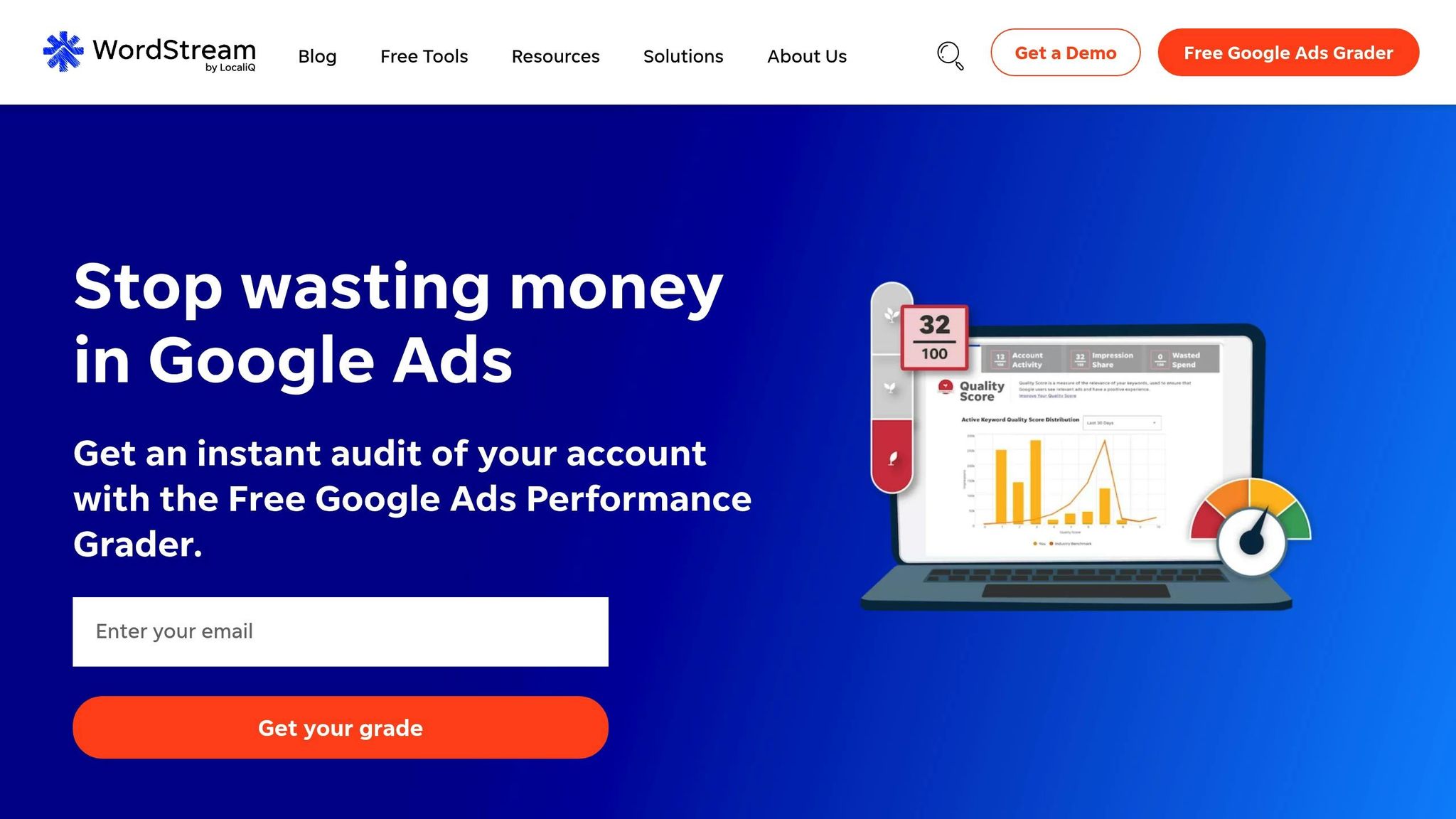
Keyword Grouping Tool, PPC Tool, SEO Tool - WordStream
Best Tools for Keyword Grouping in PPC
The right tools can transform hours of tedious keyword sorting into just minutes of streamlined organization. Below are some standout platforms designed to help you efficiently group PPC keywords into ad groups that perform.
SEMrush Keyword Magic Tool
SEMrush simplifies keyword grouping by clustering terms based on topic, search intent, and match type. Its competitive density metric (scored from 0 to 1) shows how many advertisers are bidding on a specific keyword. The PPC Keyword Tool takes it further by combining terms from multiple columns to create long-tail phrases. It also cleans up your keyword list by removing special characters, numbers, and unnecessary articles. This makes SEMrush a great option for ecommerce businesses aiming to scale both paid ads and content strategies.
WordStream AI-Driven Keyword Groups
WordStream is designed for speed, offering fast keyword organization for quick campaign launches. It categorizes keywords by intent - transactional, investigative, and instructional - helping boost Quality Scores and reduce cost-per-click (CPC). For smaller campaigns or those just starting out, WordStream also provides a free version for basic keyword grouping needs.
PEMAVOR Keyword Grouping Tool
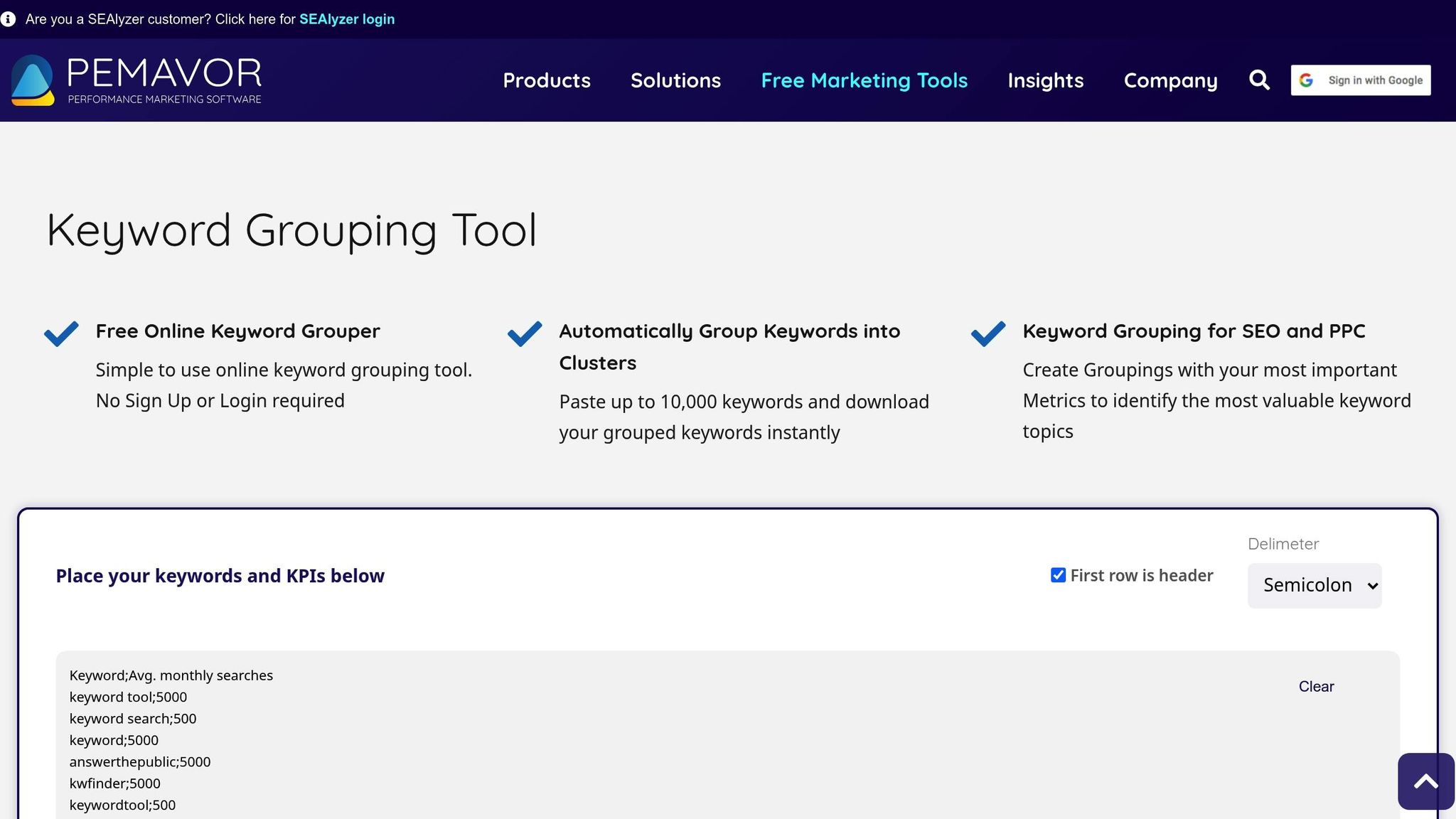
PEMAVOR uses combinatorial pattern-matching to group keywords, making it a straightforward option for PPC optimization. It avoids the complexities of advanced SERP analysis, providing a simpler yet effective solution.
Keyword Insights

Keyword Insights takes a different approach by leveraging natural language processing (NLP) to cluster keywords based on how Google interprets search intent, rather than just word similarity. It also offers features tailored to specific locations and languages, which is particularly useful for campaigns targeting regional markets. This level of precision ensures your keyword groups align with actual search behavior.
Contadu Keyword Grouper
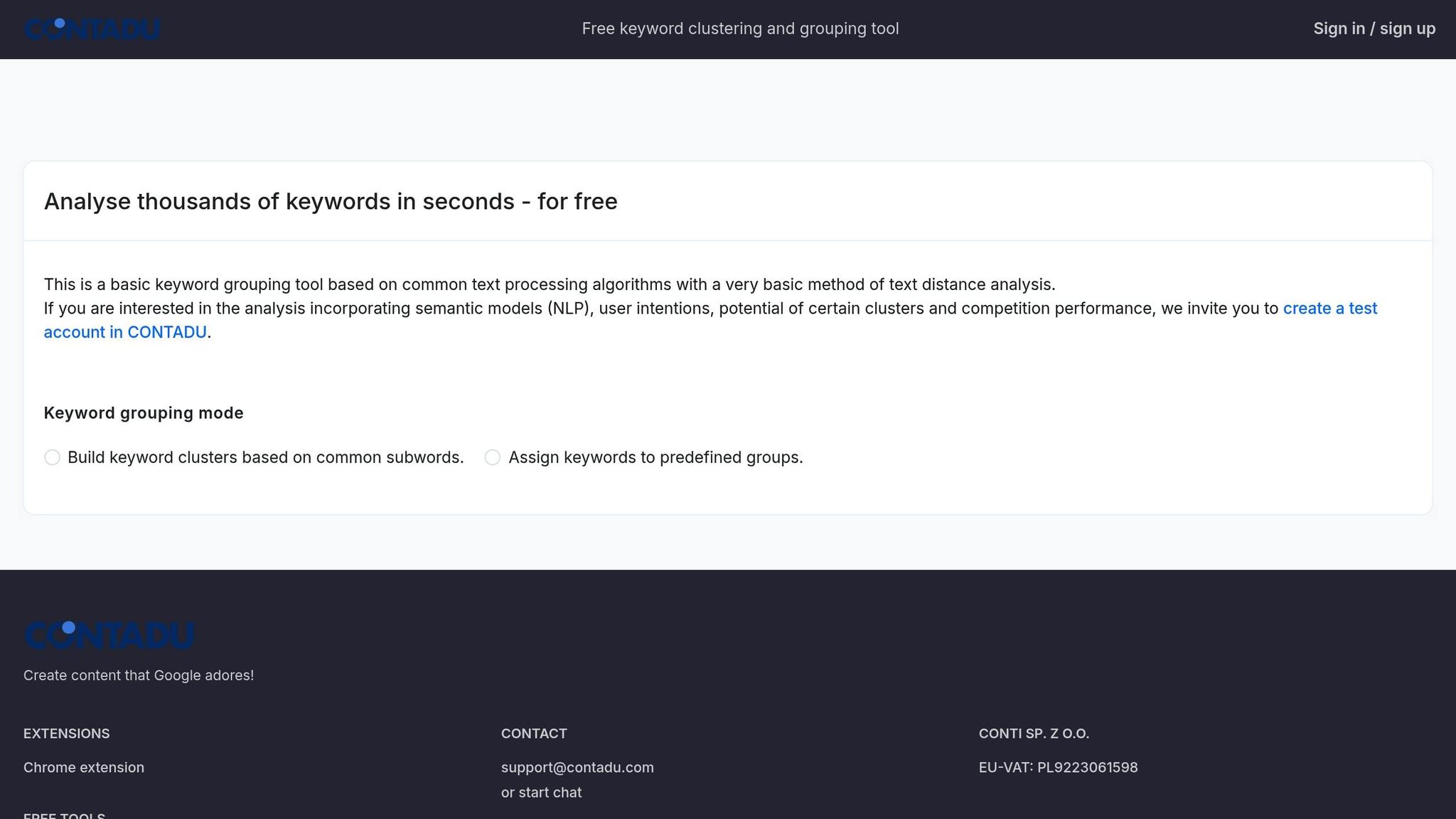
Contadu is built for scale, capable of processing up to 100,000 keywords at once using subword clustering. It exports results into spreadsheet formats that integrate seamlessly with other tools. This makes it ideal for large campaigns or agencies handling multiple accounts, where manual grouping would be too time-consuming.
ClusterAi
ClusterAi dives deep into search engine results pages (SERPs) to group keywords based on actual search outcomes. This ensures that keywords within the same group trigger similar search results, improving targeting accuracy. The tool also handles large keyword lists and delivers the organized groups directly via email, making it a great choice for advertisers revising existing campaigns.
Optmyzr Keyword Tools
Optmyzr offers advanced automation features tailored for agencies and large-scale campaigns. Beyond keyword grouping, it integrates bid management into the process and supports multiple client accounts. With options like automated ad creation and API integration, Optmyzr allows users to restructure campaigns and deploy them live without manual uploads.
Comparison of Keyword Grouping Tools
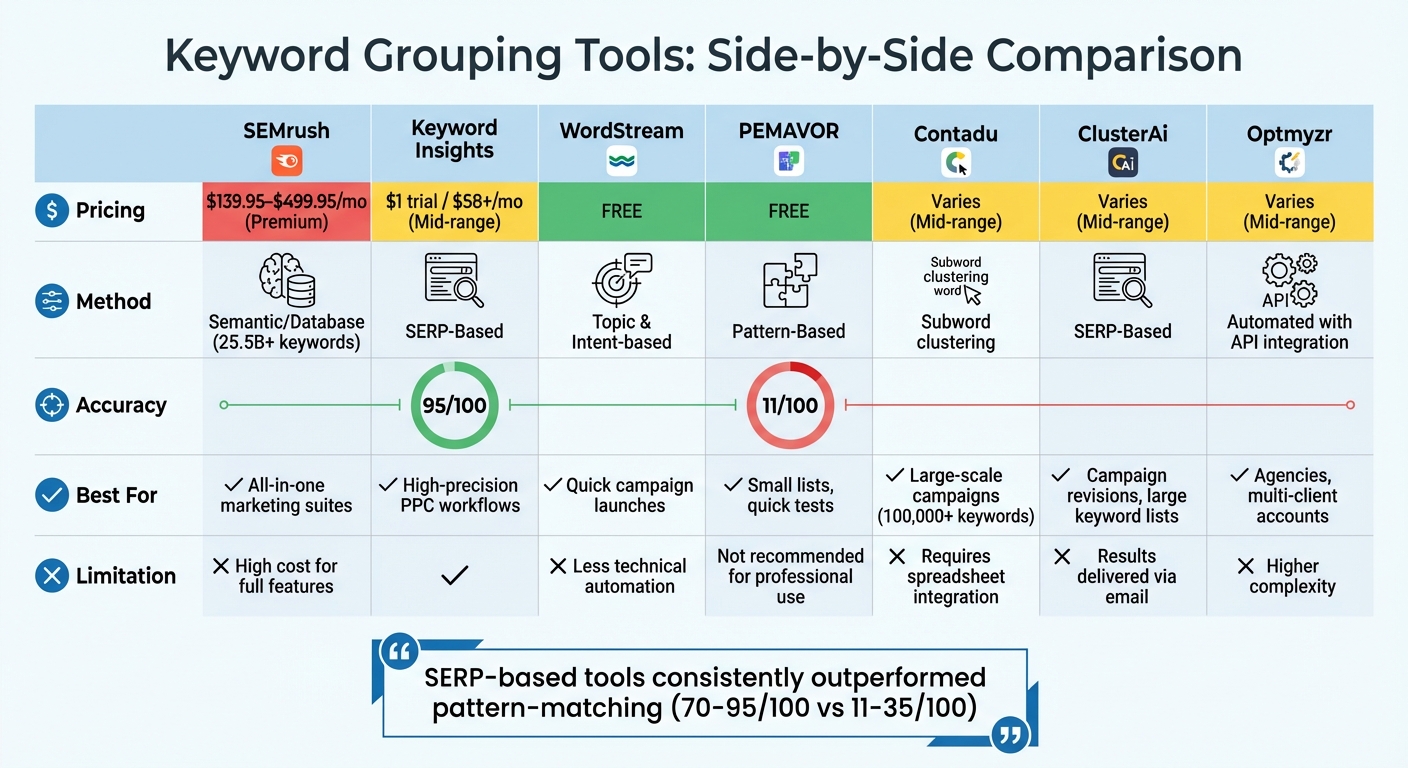
PPC Keyword Grouping Tools Comparison: Features, Pricing and Accuracy
When choosing a keyword grouping tool, it's essential to weigh factors like cost, methodology, and performance. There’s a wide range of options available, from free tools to premium platforms like SEMrush, which offers a Business plan priced at $499.95/month. The table below provides a quick overview to help you make an informed decision.
Accuracy and methodology play a big role in a tool's effectiveness. A test of 16 tools found significant differences in quality, with accuracy scores ranging from as low as 9/100 to as high as 95/100. Tools relying on SERP-based grouping consistently outperformed those using pattern-matching methods, achieving scores of 70–95/100 compared to just 11–35/100 for pattern-based alternatives. As Suganthan Mohanadasan from Keyword Insights explains:
"SERP-based tools consistently outperformed pattern-matching (70-95/100 vs 11-35/100)".
| Tool | Pricing (USD) | Grouping Method | Best For | Key Limitation |
|---|---|---|---|---|
| SEMrush | $139.95–$499.95/mo | Semantic/Database (25.5B+ keywords) | All-in-one marketing suites | High cost for full features |
| Keyword Insights | $1 trial / $58+/mo | SERP-Based (95/100 accuracy) | High-precision PPC workflows | - |
| WordStream | Free | Topic & Intent-based | Quick campaign launches | Less technical automation |
| PEMAVOR | Free | Pattern-Based (11/100 accuracy) | Small lists, quick tests | Not recommended for professional use |
| Contadu Keyword Grouper | Varies | Subword clustering | Large-scale campaigns (100,000+ keywords) | Requires spreadsheet integration |
| ClusterAi | Varies | SERP-Based | Campaign revisions, large keyword lists | Results delivered via email |
| Optmyzr | Varies | Automated with API integration | Agencies, multi-client accounts | Higher complexity |
Free tools like Google Keyword Planner and WordStream are excellent starting points for beginners. They offer basic grouping capabilities without requiring a financial investment. However, accessing precise volume data in Google Keyword Planner often requires running an active ad campaign.
For experienced marketers handling high-volume campaigns, advanced tools like SEMrush or Ahrefs are game-changers. These platforms provide robust automation features, including cross-group negatives, which help avoid internal ad competition that can inflate costs. Additionally, tools like Ahrefs can process up to 10,000 keywords in mere seconds, drastically reducing the time needed for manual grouping and enabling faster campaign optimization.
sbb-itb-89b8f36
How to Choose the Right Tool for Your PPC Campaigns
Start by aligning your tool selection with the scale and budget of your campaign. For smaller campaigns with just a few hundred keywords, free options like Google Keyword Planner or Microsoft Keyword Planner are excellent choices, offering reliable data straight from the ad platforms themselves. If you're managing a mid-sized campaign, tools like SpyFu (priced at $39/month) or Keywords Everywhere (around $2.25/month) provide more detailed insights without breaking the bank. For larger, enterprise-level campaigns, platforms like Semrush offer robust keyword databases and advanced features, with Business plans priced at $499.95/month - ideal for meeting the demands of more complex campaigns.
Cost isn't the only factor to consider; how well the tool integrates with your workflow is equally important. As your campaigns grow, integration and automation become critical. Look for tools that allow you to export data directly to Google Ads Editor via CSV files and offer features like auto-grouping to keep your ads relevant with less manual effort. Tools that help manage cross-group negatives are also invaluable - they prevent your ads from competing against one another, which can inflate costs and hurt your Quality Scores.
Another key feature to look for is intent analysis. The best tools categorize keywords by intent - whether informational, navigational, or transactional - so your ad copy aligns perfectly with where potential customers are in their buying journey. This alignment is crucial. As WordStream explains:
"The less closely related the keywords in a given ad group are, the less relevant your ads will be and the worse you'll do in the Google Ads auctions".
Lastly, choose tools that come with built-in keyword cleaning capabilities. These tools should automatically clean up keywords and provide real-time metrics, such as search volume, CPC estimates, and competitive density, before launching your campaign. In highly competitive industries, having access to competitor intelligence is a huge advantage. This feature can reveal the keywords your competitors are bidding on and even provide historical ad spend data, helping you identify strategic opportunities.
Conclusion
Organizing keywords into tightly focused clusters is a game-changer for running profitable campaigns. It enhances your Quality Score, reduces cost-per-click, and improves ad positions. In fact, data reveals that top advertisers often rely on streamlined ad groups. This approach ensures your ads align with what searchers are looking for, leading to higher ad relevance, better click-through rates, and ultimately more conversions.
Using the right tool can make keyword grouping faster and more accurate, whether you're managing a small campaign or a large enterprise account. But it's not just about having the right tool - ongoing optimization plays a crucial role.
Keyword grouping isn't a one-and-done task. Markets shift, competitors adapt, and your products or services evolve. Regularly revisiting and refining your keyword groups helps maintain a competitive edge and ensures your campaigns keep delivering strong results. This strategy builds on the techniques we've covered earlier.
For more tips and resources to refine your paid search strategy, check out the Top PPC Marketing Directory at https://ppcmarketinghub.com. You'll find tools, expert agencies, and practical advice to elevate your campaigns.
FAQs
What should I look for in a keyword grouping tool for my PPC campaign?
When picking a keyword grouping tool for your PPC campaign, it’s important to focus on a few essential factors to ensure it aligns with your goals. Start with features - the tool should help you generate keyword ideas, organize them into relevant groups, and provide key metrics like search volume, cost-per-click (CPC), and competition. These functions are essential for building well-targeted and effective ad campaigns.
Another critical factor is ease of use. Look for tools that integrate smoothly with your existing systems or workflows. Features like auto-grouping, manual adjustments, and bulk editing can streamline your process and save you valuable time. Lastly, prioritize tools that deliver actionable insights tailored to your needs, whether that’s identifying new keyword opportunities or analyzing competitor tactics. By keeping these factors in mind, you’ll set yourself up for PPC success and a more efficient campaign strategy.
What are the advantages of using SERP-based keyword grouping tools in PPC campaigns?
SERP-based keyword grouping tools bring some serious advantages to managing PPC campaigns. By diving into search engine results pages (SERPs), these tools pinpoint keywords that are closely connected and often show up for the same or similar pages. This insight helps marketers build tightly focused ad groups, which can boost ad relevance and improve Quality Scores on platforms like Google Ads. The payoff? Better click-through rates, reduced cost per click, and campaigns that stretch your budget further.
These tools also simplify landing page strategies by grouping keywords that align with the same content, making it easier to fine-tune pages for better conversions. On top of that, they reveal new keyword opportunities by analyzing how related terms perform in search results, helping you broaden your campaign’s reach and maximize ROI. In short, SERP-based keyword grouping tools make your PPC campaigns more organized, targeted, and efficient.
What are the benefits of grouping keywords in PPC campaigns?
Organizing keywords into closely related groups can make a big difference in how well your PPC ads perform. When your keywords are grouped by themes, your ads are more in tune with what users are searching for. This alignment boosts click-through rates (CTR) and improves quality scores, as your ad copy feels more relevant to the searcher. The result? More conversions and fewer wasted clicks on ads that don't hit the mark.
Another advantage of keyword grouping is how much easier it makes managing your campaigns. By dividing keywords into specific categories or performance-based segments, you can fine-tune your bidding strategies. This approach helps you focus your budget where it counts, improving your return on ad spend (ROAS). Plus, it’s simpler to spot underperforming areas and make adjustments. In short, keyword grouping doesn’t just streamline campaign management - it also enhances ad relevance, creates a better user experience, and drives stronger results.