Pinterest carousel ads let brands showcase multiple images (or "cards") in a single ad. Each card can have its own title, description, and link, making them perfect for product collections, storytelling, or step-by-step guides. These ads are highly engaging, with data showing up to 150% higher click-through rates and 2x higher return on ad spend (ROAS) compared to static formats. Below are seven examples of how brands have used this format effectively:
- Covergirl: Showcased product tutorials with captions for silent browsing and links to specific product pages.
- Cheerios: Used family-focused visuals to connect with planners and inspire breakfast ideas.
- Wedding Planner Ads: Targeted couples with PPC tools and personalized content for wedding planning.
- E-Commerce Brands: Highlighted product variations with lifestyle imagery, boosting ROAS by 42%.
- Brand Storytelling: Created multi-card narratives to explain processes or product journeys.
- Multiple Product Promotions: Allowed users to compare items like colors or sizes, improving decision-making.
- Service-Based Businesses: Broke down services into visual steps, aligning with Pinterest's planning-focused audience.
These examples highlight how carousel ads can drive engagement, conversions, and brand visibility. By tailoring content to Pinterest’s discovery-driven users, brands can achieve measurable results.
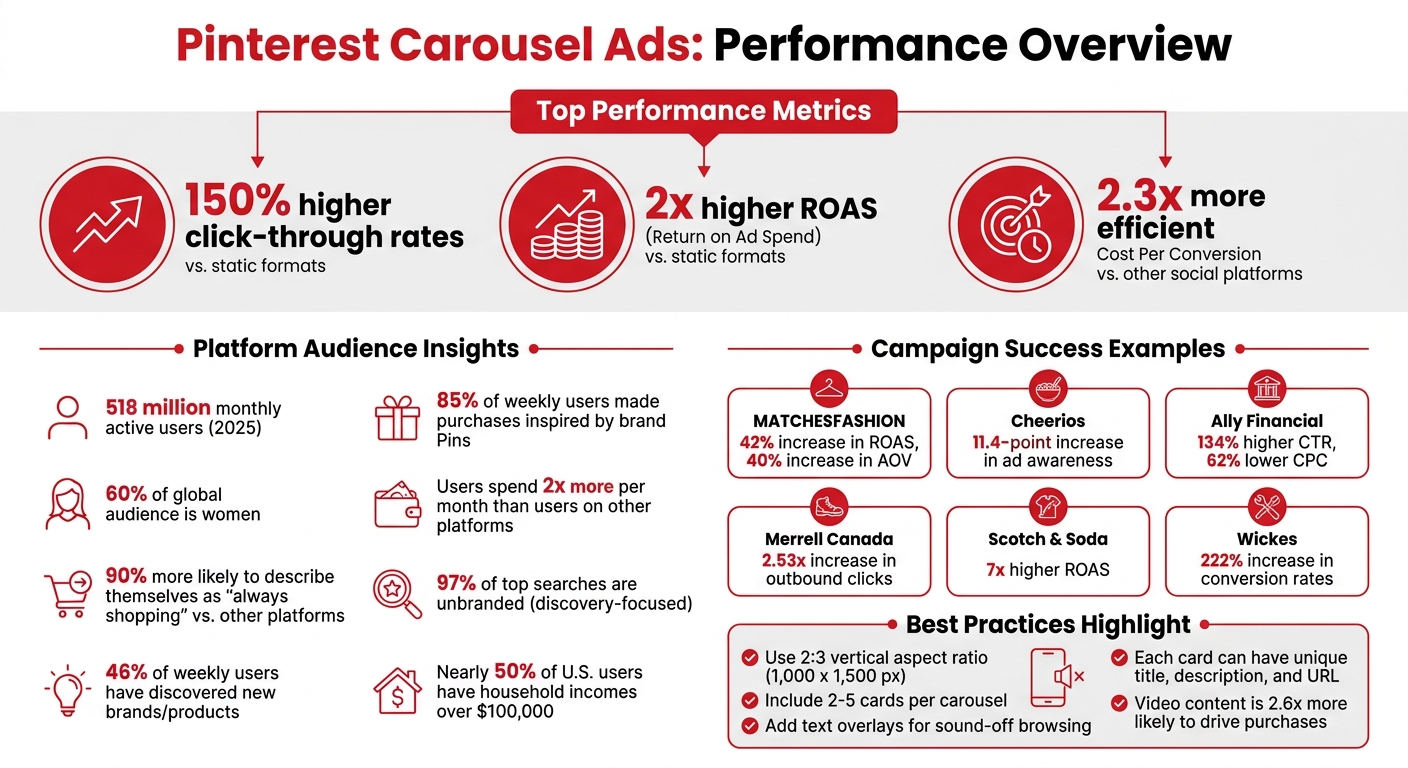
Pinterest Carousel Ads Performance Statistics and Benefits
1. Covergirl Beauty Product Showcase
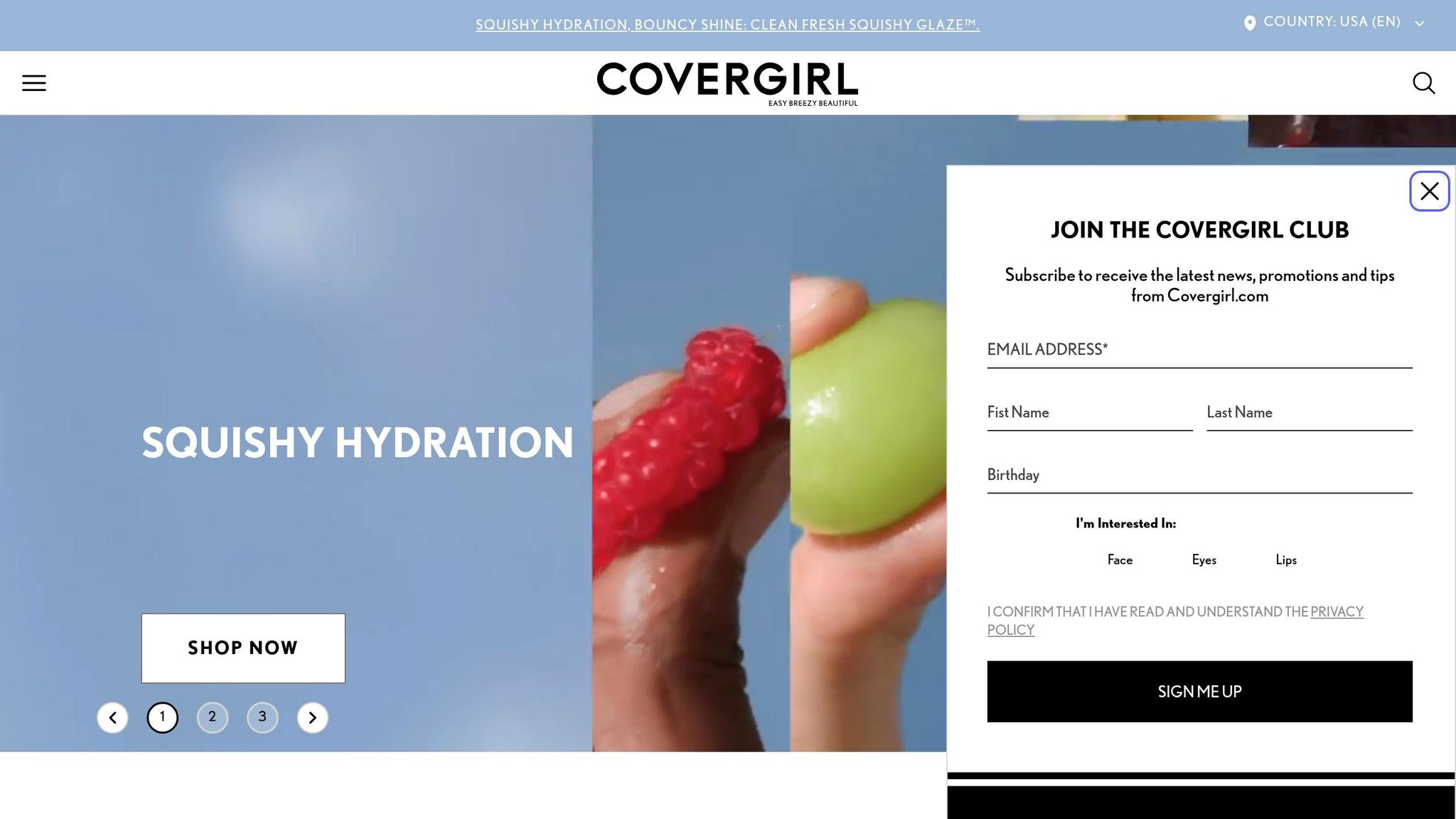
Covergirl's carousel ad is a masterclass in how beauty brands can pack multiple messages into a single carousel. The campaign features close-up video demonstrations that show users how to apply their products, paired with text that highlights the brand's vegan and cruelty-free benefits. This approach is especially effective on Pinterest, a platform where 60% of the global audience is women, and users are 90% more likely than those on other platforms to describe themselves as "always shopping".
Visual Appeal and Design
The ad stands out with high-quality product shots and captions that deliver key information. Since many Pinterest users browse with the sound off, Covergirl includes captions to ensure the message gets across visually. As Tomara Watkins, Principal at Chaptr Agency, explains:
"Do captions so that you visually add context, and you can also guide the user through what they're seeing".
Each card in the carousel is kept under 15 seconds, encouraging viewers to click through to the website for more details. This visually engaging setup makes it easy for users to explore the products interactively.
Engagement and Interactivity
The carousel format allows Covergirl to present a step-by-step product application across multiple cards. Each card links to a specific product landing page, making it simple for users to find exactly what they're looking for. This guided, interactive experience enhances the ad's effectiveness and keeps users engaged.
Alignment with Target Audience
Covergirl goes a step further by tailoring its strategy to resonate with its audience. The brand uses influencer endorsements and value-driven messaging to build trust. For example, tagging well-known influencers like Summer Fridays co-founder Marianna Hewitt adds credibility. This approach aligns well with Pinterest's affluent user base, where nearly half of U.S. users report annual household incomes over $100,000. Additionally, the focus on vegan and cruelty-free values appeals to conscious consumers, who tend to spend twice as much per month as non-Pinterest users.
2. Cheerios Family Breakfast Series
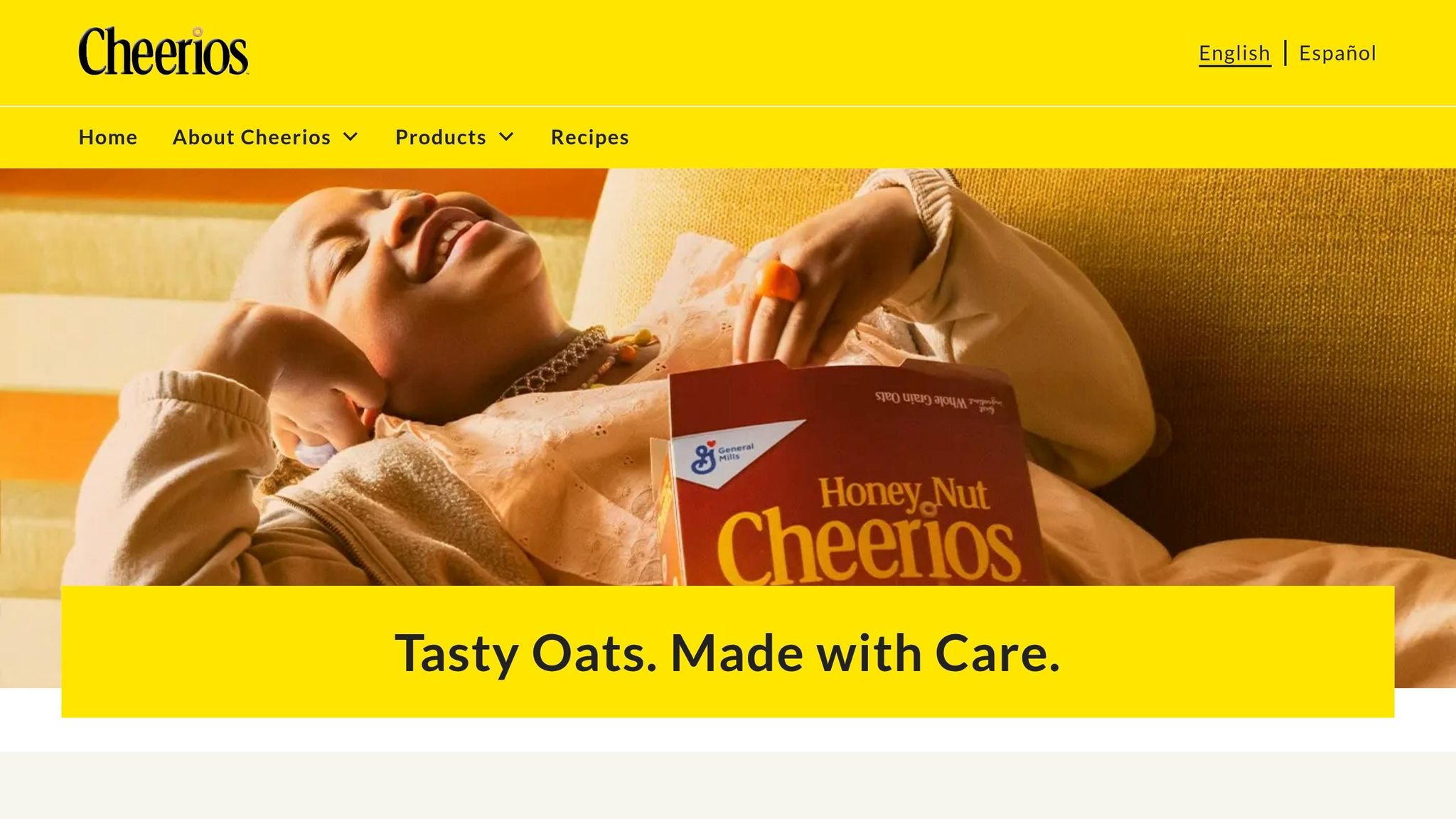
In November 2018, Cheerios became one of the first brands to experiment with Pinterest's Promoted Carousel format, launching a breakfast campaign centered around families. A Millward Brown brand lift study reported that the campaign delivered an 11.4-point increase in ad awareness and an 8.6-point rise in message association. The campaign’s impact came from its thoughtful design, interactive features, and strong connection to family-oriented planning.
Visual Appeal and Design
Instead of relying on plain product images, Cheerios used lifestyle visuals showcasing real families enjoying breakfast together. This approach resonates with Pinterest users, as lifestyle imagery performs 50% better than product-only shots in terms of cost-per-action. By depicting relatable breakfast moments, the ads help users imagine Cheerios as part of their own routines. Additionally, the consistent use of colors and fonts across the carousel cards ties everything together, creating a seamless visual journey as users swipe through.
Engagement and Interactivity
The carousel ad format encourages users to actively engage with the content by swiping through different cards. Cheerios took advantage of this by presenting a story-like experience, where users could explore various breakfast ideas and recipes. This interactive approach keeps users engaged longer, fostering a deeper connection with the brand’s message.
Alignment with Target Audience
Cheerios leveraged Pinterest’s unique appeal to planners - people searching for meal inspiration and family activities. As Jaclyn Ruckle, Social Media Manager at REI, explained:
"Promoted Carousel allows us to serve up multiple products and experiences in one place to engage the planning mindset of Pinterest's audience".
3. Wedding Planner Multi-Stage Journey
Pinterest is a go-to platform for wedding planning, with 80% of users turning to it for inspiration and organization. Ally Financial tapped into this trend with their 2023-2024 campaign, targeting couples navigating wedding expenses. They used carousel ads to illustrate financial scenarios, leading users to a personalized "wedding vow generator" focused on joint financial goals. The campaign delivered impressive results: a 134% higher average CTR than other platforms and a 62% lower cost per click.
Visual Appeal and Design
The success of wedding carousel ads lies in their ability to create a seamless visual journey. Using 2:3 vertical aspect ratio images tailored for mobile users - Pinterest's primary audience - these ads captivate attention. High-quality event photography and practical visuals like timelines resonate with couples actively planning their big day. Interactive elements, such as arrows or "1 of 5" markers, enhance engagement by signaling the ad's interactive nature. This thoughtful design draws users into an immersive experience.
Engagement and Interactivity
Carousel ads excel at simplifying complex wedding planning tasks into digestible steps. Each card links to a specific landing page, guiding users through individual stages of the process. For example, Jimmy Choo's Q1 bridal campaign targeted women aged 25+ during the post-engagement phase, aligning its creative content with trending Pinterest searches. This strategic approach paid off, achieving a 15% higher CTR than the category benchmark.
Clear Call-to-Action (CTA)
The most effective wedding carousel ads prioritize utility-focused CTAs that align with a planner's mindset. Instead of pushing a hard sell, these campaigns provide practical tools like budgeting guides, checklists, or planning tips. Megan Audette, Senior Director of Advertising and Social Media Strategy at Ally, which worked with top PPC agencies to refine their approach,, highlighted this approach:
"We knew this campaign would perform well on Pinterest because it's so often used to help people think about and plan for their next stage of life. We wanted to reach those planners, and provide them with a value-add as they prepared for or acted on those future plans".
Alignment with Target Audience
Pinterest users are naturally inclined toward planning for life milestones, making them 1.4x more likely to open a savings account for major events like weddings compared to users on other platforms. This audience is particularly receptive to ads that address specific challenges in their planning journey. As the Jimmy Choo team observed: "Pinterest is where wedding planning happens. We saw an opportunity to be part of that journey at key moments - right when people were planning".
4. E-Commerce Product Feature Highlights
E-commerce brands are making great use of carousel ads to boost conversions by weaving in creative storytelling and interactive elements. One of the biggest challenges on Pinterest is that 97% of searches are unbranded, meaning users are browsing for ideas rather than specific brands. MATCHESFASHION turned this into an advantage, using carousel ads to highlight a variety of premium fashion and homeware products. This strategy led to a 42% increase in ROAS and a 40% jump in average order value (AOV). Their success showcases how carousel ads can turn casual browsing into meaningful sales.
Visual Appeal and Design
The best e-commerce carousels combine lifestyle imagery with product details to create a stronger connection with shoppers. IKEA Canada tested this approach by comparing simple product shots to lifestyle images across categories like workspaces and kitchens. The results? Contextual home settings outperformed isolated product shots, delivering a 50% improvement in cost-per-action (CPA). Kristin Newbigging, IKEA Canada’s Director of Integrated Media, explained:
"With this test, we could see how the visual nature of Pinterest helped our Shopping program translate to sales. With our results, we see the possibilities for expanding our creative approach on the platform to help drive continued results."
To ensure the best mobile experience, a 2:3 vertical aspect ratio (1,000 x 1,500 pixels) works perfectly. Adding text overlays is another smart move since many users scroll without sound, allowing brands to communicate essential details quickly.
Engagement and Interactivity
Carousel ads can boost click-through rates by as much as 150%. Each card (2–5 per ad) can have its own headline, description, and destination URL. Features like arrows or numbering (e.g., "1 of 5") encourage users to interact with the content. For even greater efficiency, dynamic carousels can automatically pull products from a brand’s catalog feed, ensuring that the ads always feature up-to-date inventory.
Clear Call-to-Action (CTA)
Strong calls-to-action (CTAs) like "Shop Now" or "Get the Guide" are essential for high-performing carousels. Highlighting product variations - such as colors, sizes, or features - helps shoppers make decisions without leaving Pinterest. This strategy aligns perfectly with Pinterest’s shopping-oriented audience, where 85% of weekly users have made a purchase inspired by Pins from brands. By focusing on clear CTAs, brands not only enhance product discovery but also position Pinterest as a platform for serious shoppers.
Alignment with Target Audience
Pinterest attracts highly motivated shoppers. Users on the platform are 90% more likely than those on other platforms to describe themselves as "always shopping." They also spend twice as much per month and add 85% more items to their shopping carts. Since many Pinners take a week or more to finalize their purchases, carousel ads are ideal for layering in detailed product information - like features, use cases, or reviews - during their decision-making process. Retail brands also find Pinterest particularly cost-effective, with a 2.3x more efficient cost per conversion and 2x higher ROAS compared to other social platforms.
sbb-itb-89b8f36
5. Brand Storytelling Chapters
Carousel ads are an excellent tool for telling brand stories in a way that feels natural and engaging. Each card in the carousel acts like a chapter in a larger narrative, whether it's showing a step-by-step DIY process, a product's journey from creation to use, or the evolution of a brand's offerings. Tanmay Ratnaparkhe, Co-founder of Predis.ai, highlights this format's versatility:
"This format best suits explaining a deeper story about your brand, showcasing various product features, or taking people through a step-by-step process".
Visual Appeal and Design
Consistency in visuals is key to making carousel ads effective. Using the same color palette, fonts, and overall design across all cards helps create a seamless experience that reinforces brand identity. A 2:3 aspect ratio ensures the ads display properly on both mobile and desktop devices. Adding text overlays is another smart move, as they ensure the message is clear even when users view the ad without sound. These overlays should be short, easy to read, and support the visuals without overpowering them.
Engagement and Interactivity
The swipe-through format of carousel ads encourages users to explore the story, keeping them engaged. What’s even better? Each card can link to a unique landing page, making it easy to direct users to specific content or products that match their interests. This approach works particularly well on Pinterest, where video content is 2.6 times more likely to drive purchases compared to static images. By mixing video and static cards in a single carousel, brands can create campaigns that feel dynamic and interactive, naturally leading to stronger calls-to-action.
Clear Call-to-Action (CTA)
A strong call-to-action (CTA) can significantly improve ad performance, boosting ad recall by 40%. Merrell Canada demonstrated this with their campaign for Moab 3 hiking boots. They used carousel ads blending sporty and lifestyle visuals and took advantage of Pinterest's "direct links" feature. The results? A 2.53x increase in outbound clicks and a 60% improvement in cost per outbound click. As Mo from Merrell Canada put it:
"Pinterest's array of ads products and formats has helped us take Merrell Canada to new heights, especially after opting in for direct links".
Alignment with Target Audience
Carousel ads on Pinterest are particularly effective because they align with the platform’s audience, known for its thoughtful and intentional decision-making process. With over 518 million monthly active users as of 2025, Pinterest provides a massive opportunity for brands to connect through multi-chapter storytelling. Using Pinterest Trends, brands can tap into seasonal themes and consumer interests - like "adventurer aesthetics" or "holiday baking" - to ensure their story resonates with what users are actively searching for.
6. Multiple Similar Products Promotion
When it comes to e-commerce, this strategy is all about catering to shoppers who are comparing different product options. For items available in multiple variations, carousel ads are a game-changer. They let shoppers jump directly to the specific variant they’re interested in. By linking each card in the carousel to the corresponding product page, you can make the buying process smoother and potentially increase click-through rates by up to 150%.
Visual Appeal and Design
The secret to effective multi-product carousels lies in their design. Consistency is key - use the same layout, fonts, and color scheme across all cards. For the best mobile experience, design your cards in a 2:3 aspect ratio (1,000 x 1,500 pixels). Start with your hero image - this should be your most eye-catching or best-selling product - to grab attention as users scroll. To encourage further exploration, add subtle swipe indicators like arrows or "1 of 5" markers. One leading e-commerce brand found that combining consistent visuals with well-placed CTAs led to significant performance gains.
Engagement and Interactivity
Carousel ads are more than just a visual tool - they’re interactive. Swiping through the cards turns passive viewers into active participants. Each swipe increases dwell time, which signals Pinterest’s algorithm that your ad is engaging, potentially boosting its visibility in feeds. Since 97% of top Pinterest searches are unbranded, this approach aligns perfectly with users’ discovery-focused behavior. They’re not just looking for specific brands - they’re open to discovering something new. Scotch & Soda tapped into this mindset with clean, product-focused carousel ads, reaching 800,000 unique users and achieving a 7x higher ROAS compared to previous campaigns.
Clear Call-to-Action (CTA)
Every card in your carousel should include a strong, direct CTA. Use action-oriented language to guide shoppers, and make each card’s headline, description, and URL specific to the product it highlights. For example, Missguided added product names and prices alongside “Shop Now” buttons, which helped them achieve a 50% ROAS and a 25% lower cost per action compared to earlier campaigns.
Alignment with Target Audience
Pinterest users are often in a discovery mode, comparing options before making a purchase. Highlighting product variations - like different lipstick shades or rug patterns - fits this behavior perfectly. The data supports this: 46% of weekly Pinterest users have discovered a new brand or product on the platform, and Pinterest ads are 2.3x more cost-efficient for conversions than other social platforms. IKEA Canada tested this approach by comparing lifestyle imagery (products in real-world settings) with simple product shots. Their lifestyle-focused ads delivered a 50% improvement in cost-per-action across all audience groups in July 2025.
7. Immersive Service Angles Display
For service-based businesses, Pinterest presents a unique challenge: how do you visually represent something that isn't physical? Using top PPC advertising tools can help you bridge this gap. Carousel ads provide the perfect solution by turning services into a visual story spread across multiple cards. This format allows you to break down your service into digestible steps, showcasing processes, packages, or transformations. It's a natural fit for Pinterest's discovery-focused platform, where users are eager to explore and learn.
Visual Appeal and Design
To make your service stand out, focus on creating a visually cohesive story. Stick to a consistent color palette, fonts, and spacing across 2–5 cards. Use a vertical 2:3 aspect ratio (1,000 x 1,500 px) for each card to maintain a polished and unified look. Keep text overlays minimal - no more than 20% of the image - and ensure text is legible by using at least 30pt for body text and 50pt for headlines, especially for mobile users. Your first card should grab attention with a bold visual or a teaser that hints at value, while the final card should include a strong call-to-action (CTA) to guide users toward the next step. This approach ensures a seamless and engaging user experience.
Engagement and Interactivity
Carousel ads encourage interaction by turning passive viewers into active participants. As users swipe through the cards, they spend more time engaging with your content, which signals Pinterest's algorithm to prioritize your ad. Add subtle cues like arrows or "1 of 5" markers to highlight the interactive nature of the carousel. This strategy aligns perfectly with Pinterest's user behavior, as 85% of users visit the platform to plan projects or explore service-related ideas.
Clear Call-to-Action (CTA)
Each card in your carousel can include a unique title (up to 100 characters), description (up to 500 characters), and destination URL. This flexibility lets you direct users to specific landing pages, such as a consultation form, pricing details, or a portfolio gallery. Place your most compelling CTA on the final card, using high-contrast design elements like "Book Now" or "Get the Guide" to encourage action. With Pinterest's one-tap expansion feature, users can seamlessly swipe through your cards in full-screen mode and access linked pages without friction.
Alignment with Target Audience
Pinterest users often arrive with clear intentions - planning weddings, tackling home renovations, or starting fitness journeys. Service carousels that align with these "life moments" tend to see higher engagement and relevance. For example, in 2021, Scotch™ Brand created "how-to" Idea Pins and Carousel ads aimed at parents preparing for back-to-school crafts. By analyzing search terms like "preschool crafts", they developed step-by-step tutorials. This targeted strategy led to a 64% lower cost per impression compared to benchmarks and a 4x higher click-through rate (CTR). Since 97% of top Pinterest searches are unbranded, users are actively seeking ideas and solutions rather than specific companies, making it an ideal platform to showcase your expertise. By tailoring your service to match these user intentions, you can create deeper connections with Pinterest's project-focused audience.
What Makes These Carousel Ads Work
Four key principles underpin the success of these carousel ads.
1. Visual storytelling takes center stage. By blending lifestyle imagery with product shots, these ads help users imagine the product as part of their daily lives. Ads that align with Pinterest's aesthetic - like DIY tutorials or polished, high-quality photos - naturally draw more engagement.
2. Benefits are front and center. The most compelling visuals and messages are placed in the first few slides, knowing that many users won’t swipe through the entire carousel. Text overlays highlight essential perks like "waterproof" or "free shipping" without cluttering the design.
3. Clear and strategic CTAs. Calls-to-action (CTAs) such as "Shop now" are direct and positioned thoughtfully - typically at the bottom - so they don’t distract from the visuals. This strategy has proven effective: MATCHESFASHION saw a 42% boost in ROAS and a 40% increase in average order value, while Missguided achieved a 50% ROAS improvement and cut CPA by 25%.
4. Smart audience targeting. These ads align with Pinterest users' discovery-driven behavior, as top searches on the platform are often unbranded. For example, Wickes used a full-funnel strategy with Interest and Keyword targeting, combining CPM bidding for awareness and CPC bidding for retargeting. The result? A 222% increase in conversion rates. Pinterest users are also more likely to shop actively, spending twice as much per month as users on other platforms.
Together, these principles create a winning formula for Pinterest carousel ads.
For brands looking to replicate this success, the strategies showcased in the seven carousel ad examples above provide a roadmap for impactful campaigns. To maximize your efforts, consider tapping into expert tools and services through the Top PPC Marketing Directory. With Pinterest ads delivering 2.3× more efficient Cost Per Conversion and retail brands seeing 2× higher ROAS, bringing in the right expertise can make all the difference.
FAQs
How many cards should a Pinterest carousel ad include?
A Pinterest carousel ad generally features 2 to 5 cards (images). This number strikes a balance, offering enough variety to capture attention without overwhelming the viewer, keeping the ad both engaging and to the point.
Should each carousel card link to a different landing page?
Connecting each carousel card to a unique landing page is a smart move. Why? It allows you to showcase multiple features or products effectively, making the most out of the carousel format. This strategy not only encourages users to interact with the carousel but also provides a more personalized experience by directing them to pages tailored to their interests. It's a simple way to boost engagement and make your content more impactful.
What’s the best image size for Pinterest carousel ads?
The best image size for Pinterest carousel ads is 1000x1500 pixels, maintaining a 2:3 vertical aspect ratio. This layout is perfect for grabbing attention and looks great on mobile screens.