AI and manual budget allocation for PPC campaigns each have strengths and weaknesses. AI excels in speed, real-time adjustments, and processing vast data points across platforms using top PPC tools for Google, Meta, TikTok, and LinkedIn. It can boost ROAS by 25–40% and reduce ROI volatility, but it requires accurate data and may overlook nuanced business factors. Manual allocation, while slower and labor-intensive, offers greater control and is better suited for niche campaigns, new product launches, and strategic pivots.
Key Takeaways:
- AI Pros: Real-time optimization, cross-platform efficiency, and scalability.
- AI Cons: Dependent on accurate data, lacks context for business nuances.
- Manual Pros: Greater control, strategic adjustments for complex needs.
- Manual Cons: Time-consuming, reactive, and limited scalability.
Quick Comparison:
| Factor | AI-Driven Allocation | Manual Allocation |
|---|---|---|
| Speed | Real-time (5–30 min updates) | Weekly or monthly adjustments |
| Data Handling | Processes 200+ signals instantly | Limited to key KPIs in spreadsheets |
| Control | High-level goal-setting | Detailed, hands-on control |
| Scalability | Handles complex multi-channel setups | Limited by team capacity |
| Labor Intensity | Low | High (8–20+ hours/month per account) |
| Risk | May optimize on wrong signals | Prone to human error and delays |
For the best results, combine both approaches: let AI handle routine tasks while humans focus on strategic decisions. This hybrid method balances efficiency with thoughtful oversight, ensuring campaigns perform effectively across all channels.
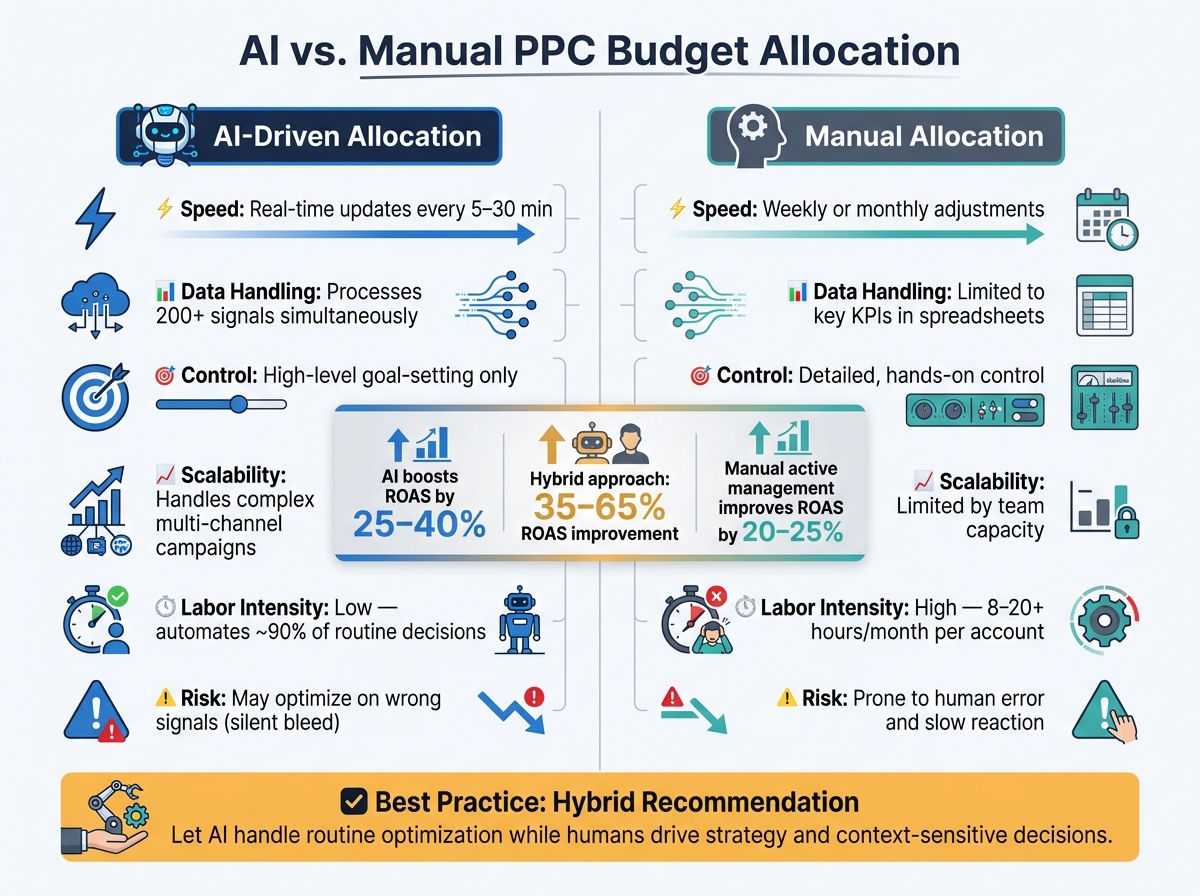
AI vs. Manual PPC Budget Allocation: Key Differences at a Glance
PPC Advertising 2026: Why Manual Bidding is Dead (AI Strategies & Benchmarks)
sbb-itb-89b8f36
How AI-Driven Budget Allocation Works
AI budget allocation relies on machine learning to analyze campaign performance and shift funds to the most effective areas - automatically. Instead of making manual adjustments every week, this system reallocates budgets in near-real-time, often within 5–30 minutes, using live data from all connected platforms. This process is powered by a three-layer mechanism.
The system starts with data ingestion, pulling in performance signals from various touchpoints. Then, predictive modeling identifies patterns across channels and audiences. Finally, recommendation delivery tests different spending scenarios and applies the most effective one. These machine learning models can process anywhere from 100 to over 500 data points simultaneously, including metrics like conversion rates, cost-per-acquisition, creative fatigue, competitive pressure, device type, and even time of day.
Key Features of AI-Based Allocation
One standout feature is cross-platform arbitrage. Instead of reacting to performance changes on individual platforms, the system tracks performance across Google, Meta, TikTok, and LinkedIn simultaneously. It then reallocates budgets to the platform delivering the lowest cost-per-acquisition at any given moment. For instance, if LinkedIn's CPA spikes on a Tuesday afternoon while Google Search performs well, the system adjusts budgets in real time to maximize efficiency.
Another feature gaining traction is signal-based budgeting. This approach moves away from fixed channel splits (like "30% Google, 20% Meta") and organizes spending by user intent. Campaigns are categorized by signals such as Intent, Discovery, or Trust, allowing budgets to follow conversion probabilities rather than sticking to platform-specific allocations.
"AI-driven budgeting can work best when spend follows purchase intent, not channels." - Lisa Raehsler, SEM Strategy Consultant, Big Click Co.
Benefits of AI Budget Allocation
The results speak for themselves. AI-driven budget allocation can boost ROAS by 25% to 40%, reduce ROI volatility by 15% to 25%, and shorten optimization cycles by 30% to 50%. For example, an e-commerce advertiser spending $20,000 per month on ads could save around $2,400 monthly by switching to automated allocation.
For larger enterprises spending over $1,000,000 per month, manual budget adjustments often lag behind market changes, leading to a 12% to 19% loss in efficiency. AI bridges this gap by making adjustments hourly - or even minute by minute - ensuring that campaigns stay aligned with shifting performance metrics.
Challenges of AI Allocation
While the benefits are clear, AI allocation isn’t without its hurdles. The system depends heavily on accurate data. According to McKinsey, poor tracking and weak attribution can waste 20% to 30% of ad spend. If your conversion tracking is broken or inconsistent across platforms, the AI might confidently optimize toward the wrong outcomes.
Another challenge is the learning period. Most machine learning systems require 4 to 8 weeks of data and at least 30 to 50 conversions per campaign per month to start optimizing effectively. During this time, performance can be unpredictable. Even after the system stabilizes, it lacks visibility into factors like upcoming product launches, brand safety concerns, or strategic goals that aren’t reflected in the data.
"The algorithm is only as smart as the conversion architecture, value logic, exclusions, and campaign boundaries around it." - ALM Corp
A more nuanced issue is conversion overlap. For instance, Google's Performance Max might attribute conversions to itself that branded search campaigns could have achieved at a lower cost. Since the AI operates within a single platform’s silo, it may not flag these overlaps. To mitigate this, setting budget floors and ceilings for each channel remains a crucial safeguard, even when automation is in place. This ensures that the system doesn’t inadvertently optimize in ways that harm overall performance.
How Manual Budget Allocation Works
Manual budget allocation is a process that relies heavily on human decision-making to gather data from various platforms and redistribute funds accordingly. Unlike AI systems that adapt instantly, this method involves periodic evaluations led by people, making it a slower and more deliberate approach.
"Traditional budget management requires a human to pull performance data from each platform, compare CPAs in a spreadsheet, decide on a new allocation, and log into each platform to make changes. This process takes hours and happens, at best, once a week." - Synter
Key Features of Manual Allocation
The process begins with analyzing historical data to establish a baseline for performance. Marketers then allocate fixed percentages of their budget to platforms like Google Ads or Meta. To monitor results, they must log into each platform's dashboard individually. When discrepancies arise, data is exported into spreadsheets for side-by-side comparisons, as each platform uses its own attribution models and reporting metrics.
Adjustments to budgets are typically made weekly or monthly, guided by recent trends or subjective judgment. Beyond these broad reallocations, managers also handle smaller tasks like tweaking bids, creating negative keyword lists, pausing poor-performing placements, and testing ad copy. Many teams follow the 70-20-10 rule: dedicating 70% of the budget to reliable channels, 20% to secondary ones with potential, and 10% to experimental efforts.
Benefits of Manual Budget Allocation
One of the biggest advantages of manual allocation is the control it offers. Human managers can account for unique variables like upcoming product launches, changes in sales capacity, or shifts in brand strategy - factors that algorithms might overlook. Teams that actively adjust budgets based on performance data have reported a 20–25% improvement in ROAS compared to those that stick to static monthly budgets.
Challenges of Manual Allocation
The most pressing challenge with manual allocation is the time it consumes, especially at scale, which is why many businesses partner with top PPC agencies to manage complex accounts. For example, the Johnson Group, an advertising firm, managed budgets for a client running over 400 Meta campaigns and 1,200 Google Ads campaigns. According to Group Media Manager Jared Drahonovsky, a team of four to five people spent 12–15 hours weekly - equivalent to two to three full workdays - just on pacing adjustments to prevent overspending.
"We were spending so much time pacing every day, every week... it was the biggest thing we were looking to solve." - Jared Drahonovsky, Group Media Manager, Johnson Group
Another issue is the "morning after" problem, where campaigns may overspend overnight before anyone can intervene, leading to budget overruns and potential client credits. Additionally, delays caused by manual processes - such as reviewing reports, identifying underperforming channels, and securing approvals - can mean missed market opportunities. In fact, 54% of CMOs report that manually consolidating data from multiple sources only adds to these delays. This reactive and time-intensive system contrasts sharply with the speed and efficiency of AI-driven solutions.
| Manual Allocation Step | Description | Frequency |
|---|---|---|
| Data Ingestion | Pulling data from Google, Meta, and CRM systems | Daily/Weekly |
| Performance Audit | Comparing ROAS and CPA across channels in spreadsheets | Weekly |
| Budget Shifting | Moving funds from underperforming platforms to winners | Monthly/Bi-weekly |
| Bid Optimization | Manual bid adjustments for specific keywords and audiences | Daily/Weekly |
AI vs. Manual Budget Allocation: Key Comparisons
When it comes to budget allocation, speed is one of the most striking differences between AI and manual methods. AI operates on a rapid, minute-by-minute basis, while manual adjustments often happen weekly or monthly. For enterprises spending over $1 million each month, this delay can lead to a 12–19% efficiency loss.
Data Signals and Context
AI shines in its ability to process over 200 signals in real-time, such as device type, time of day, competitor activity, and even weather patterns. This level of data handling is unmatched by manual methods, which typically focus on a limited set of KPIs. As ShopClawMart aptly put it:
"Budget reallocation is pattern recognition plus arithmetic plus speed - exactly the kind of work an AI agent can do better, faster, and without the existential dread of a Monday morning spreadsheet session." - ShopClawMart
However, manual allocation has its own strengths. When broader business context comes into play - like product recalls, rebranding efforts, or staffing changes - human managers can adapt instantly. AI, on the other hand, struggles to account for these nuanced factors.
Control and Risk Management
Another critical distinction lies in control and risk management. Manual allocation allows for detailed control over specific keywords, match types, and placements. This precision is especially valuable in industries like healthcare or finance, where compliance is non-negotiable. AI, while efficient, operates within a "black box" model. Advertisers set high-level goals like target CPA or ROAS, but the underlying decision-making remains opaque and harder to audit. This can be a concern when managing multi-channel PPC management platforms where transparency is key.
Comparison Table
Here's a breakdown of the key differences between AI-driven and manual budget allocation:
| Factor | AI-Driven Allocation | Manual Allocation |
|---|---|---|
| Speed of Optimization | Real-time; every 5–30 minutes | Weekly or monthly; reactive |
| Data Handling | Processes 200+ signals simultaneously | Limited to key KPIs in spreadsheets |
| Required Oversight | Strategic guardrails and goal-setting | Daily monitoring and manual input |
| Adaptability | High for data trends and market shifts | High for new products and business pivots |
| Labor Intensity | Low; automates ~90% of routine decisions | High; 8–20+ hours per account per month |
| Scalability | High; handles complex multi-channel campaigns | Low; limited by human bandwidth |
| Risk Management | Risk of "silent bleed" if optimizing toward wrong signals | Risk of human error and slow reaction time |
This comparison highlights how each approach has distinct advantages depending on the context, priorities, and challenges of the campaign. AI excels in speed and scalability, while manual methods offer unmatched adaptability and control in situations requiring nuanced judgment.
When to Use AI or Manual Budget Allocation
Deciding between AI and manual budget allocation depends on factors like your campaign's size, data availability, and strategic goals. Elements such as conversion speed, the scale of operations, and team bandwidth all influence which method will deliver the best results.
Best Use Cases for AI Allocation
AI shines in data-rich environments. For example, tools like Google’s Smart Bidding work best with at least 30 conversions per month, while Performance Max campaigns require 50+ conversions to optimize effectively. Below these thresholds, AI may focus on outliers rather than identifying meaningful trends.
AI is particularly effective for large-scale, multi-channel campaigns spanning platforms like Google, Meta, TikTok, and LinkedIn. In these cases, the sheer speed of cross-channel interactions makes manual analysis impractical. The results speak for themselves: companies that integrate AI into their commercial operations report ROI gains of 10% to 20%. For e-commerce brands with quick conversion cycles and high transaction volumes, AI’s ability to make real-time adjustments is invaluable, capturing opportunities that manual reviews - often conducted weekly - would miss.
"AI budget allocation tools use machine learning to process cross-channel performance data and recommend spend shifts that human analysts would miss or take too long to identify." - Knowledge Hub Media
However, when data is limited or campaigns require a nuanced understanding of the business, manual allocation may be the better option.
Best Use Cases for Manual Allocation
Manual allocation comes into its own for niche or complex campaigns where AI might struggle. For instance, in highly specific B2B campaigns targeting particular job titles, AI might broaden the audience too much in an attempt to scale.
When launching a new product with no historical data, manual control ensures budgets are aligned with clear impression goals and avoids overspending. Similarly, brand term campaigns often demand a manual approach to maintain a 90%+ impression share and ensure messaging is on point. As ALM Corp aptly put it:
"Automation is a force multiplier, not a strategy. It multiplies good judgment when you have it. It multiplies hidden inefficiency when you do not." - ALM Corp
Manual allocation also remains critical for upper-funnel campaigns focused on awareness and trust-building. AI typically prioritizes bottom-funnel conversions, potentially starving awareness and consideration budgets without deliberate human oversight. Ultimately, the choice between AI and manual allocation comes down to balancing the need for real-time efficiency with the value of contextual, human-driven control - both of which are essential for multi-channel PPC strategies and tools.
Tips for Managing Multi-Channel PPC Budget Allocation
Prerequisites for Effective Budget Allocation
Before shifting your PPC budgets, make sure your data is reliable. Poor tracking and weak attribution can waste anywhere from 20% to 30% of your marketing spend, which means you're losing money before optimizations even begin.
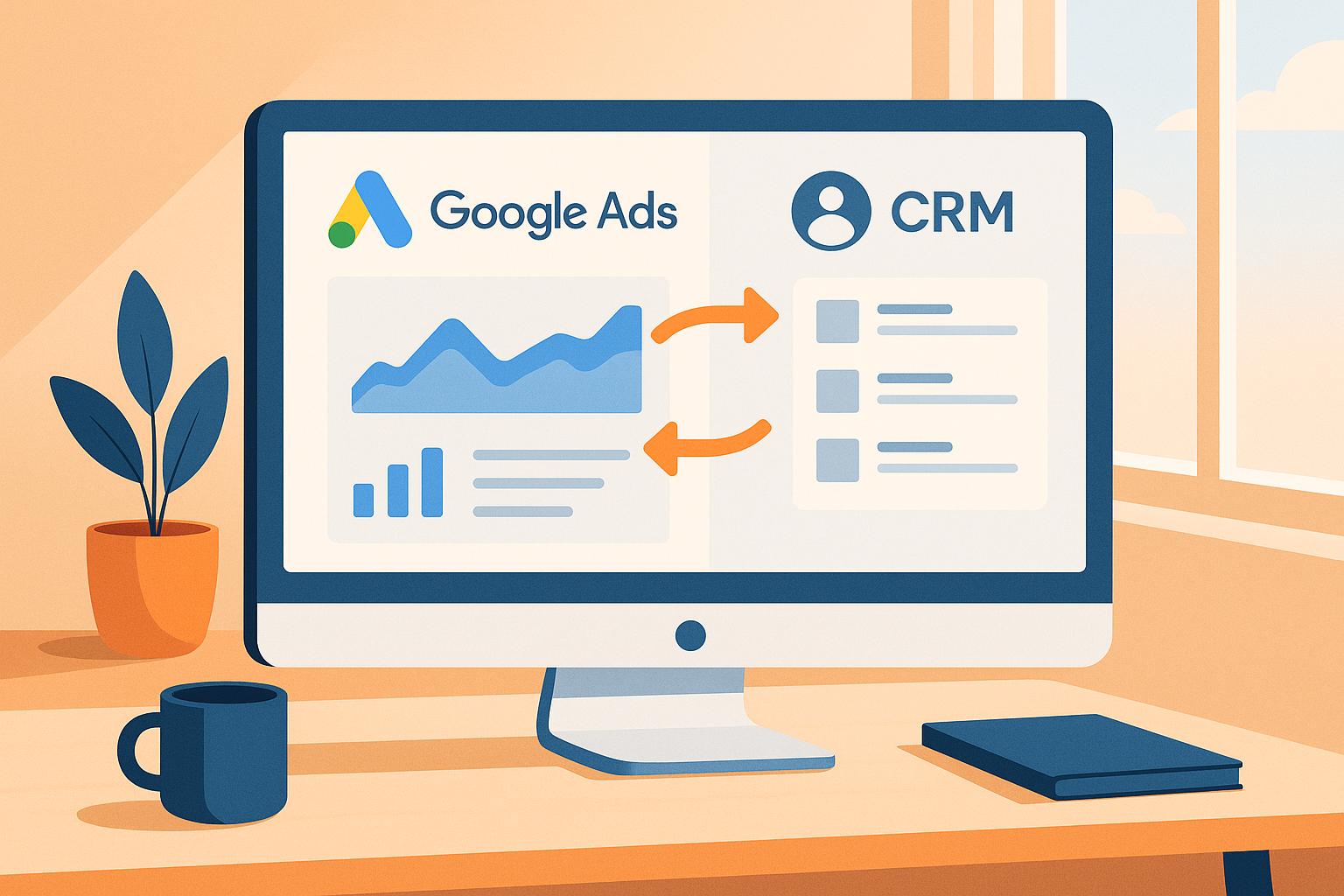
As mentioned earlier, both AI-driven and manual approaches depend on accurate data. Without it, neither method will deliver the results you're looking for. To fix this, consider using server-side tracking or a Conversions API (CAPI) and link your CRM to align conversion data with actual revenue. This way, you're optimizing for profit, not just activity metrics. Experts suggest having at least 12 to 18 months of consistent data before relying on PPC bid management tools for budget decisions. Without this historical data, even the smartest AI won't have enough to work with.
Once you've built a strong data foundation, you can move on to managing your budget across multiple PPC channels.
Managing Budgets Across Multiple Channels
Whether you're using AI or manual methods, a structured approach is key. The 70-20-10 model is a great starting point. Its biggest advantage? It ensures every channel gets enough budget to move past the learning phase and gather meaningful data for optimization. Remember, two well-funded channels will always outperform four that are underfunded.
Underfunding is a common pitfall to avoid. James Ketchell of LeadDigital puts it succinctly:
"If your budget allocation leaves any channel below its minimum viable spend, you're not testing that channel. You're donating to it."
If you're automating budget adjustments, set clear limits. Keep changes within 10–20% to avoid reacting to short-term fluctuations. These limits help prevent AI from over-optimizing based on limited data and counteract the slower response times of manual management. Additionally, keep branded and non-branded campaigns separate. This ensures automation doesn't mistakenly give credit to brand terms for demand driven by other channels like social or display. Finally, allocate experimental budgets separately to avoid competing with your top-performing campaigns.
PPC Tools and Resources for Budget Allocation
Once you've addressed PPC budget planning and structured your channels, the right tools can take your allocation to the next level. Whether you're running a lean manual setup or leveraging advanced automation, there are tools designed to suit nearly every scenario. Below, we’ll explore examples tailored to both AI-driven and manual approaches.
For AI-driven allocation, platforms like Marin Ascend manage spending across Google, Meta, and LinkedIn simultaneously. If you're focused on Google Ads and need to account for conversion lag, Lyra is a solid option - especially if your sales cycle stretches beyond just a few days. Another standout is Adsoptia, which uses Bayesian smoothing to optimize budget distribution across the most profitable time slots and days. This tool has been shown to deliver a conversion lift of 18%–32% while recovering $800 to $2,400 in monthly wasted spend. For B2B teams, Lantern is worth considering as it integrates CRM pipeline data to prioritize budgets based on actual revenue, not just platform-level conversions.
If you prefer manual control, tools like Adalysis provide a dashboard-driven suite with features like spend projections, real-time pacing, and rollover management for over- or underspending. AdsGo, on the other hand, allows for dynamic budget adjustments while still offering manual override options based on metrics like CTR, CPA, and ROAS.
Here’s a quick comparison of these tools:
| Tool | Primary Focus | Manual Control Level |
|---|---|---|
| Adalysis | Multi-channel management | High |
| AdsGo | Meta & Google Ads | High |
| Lantern | B2B pipeline | Medium |
| Lyra | Google Ads | High |
| Adsoptia | Google Ads time-slot optimization | Medium |
| Marin Ascend | Cross-platform | Medium |
How the Top PPC Marketing Directory Can Help
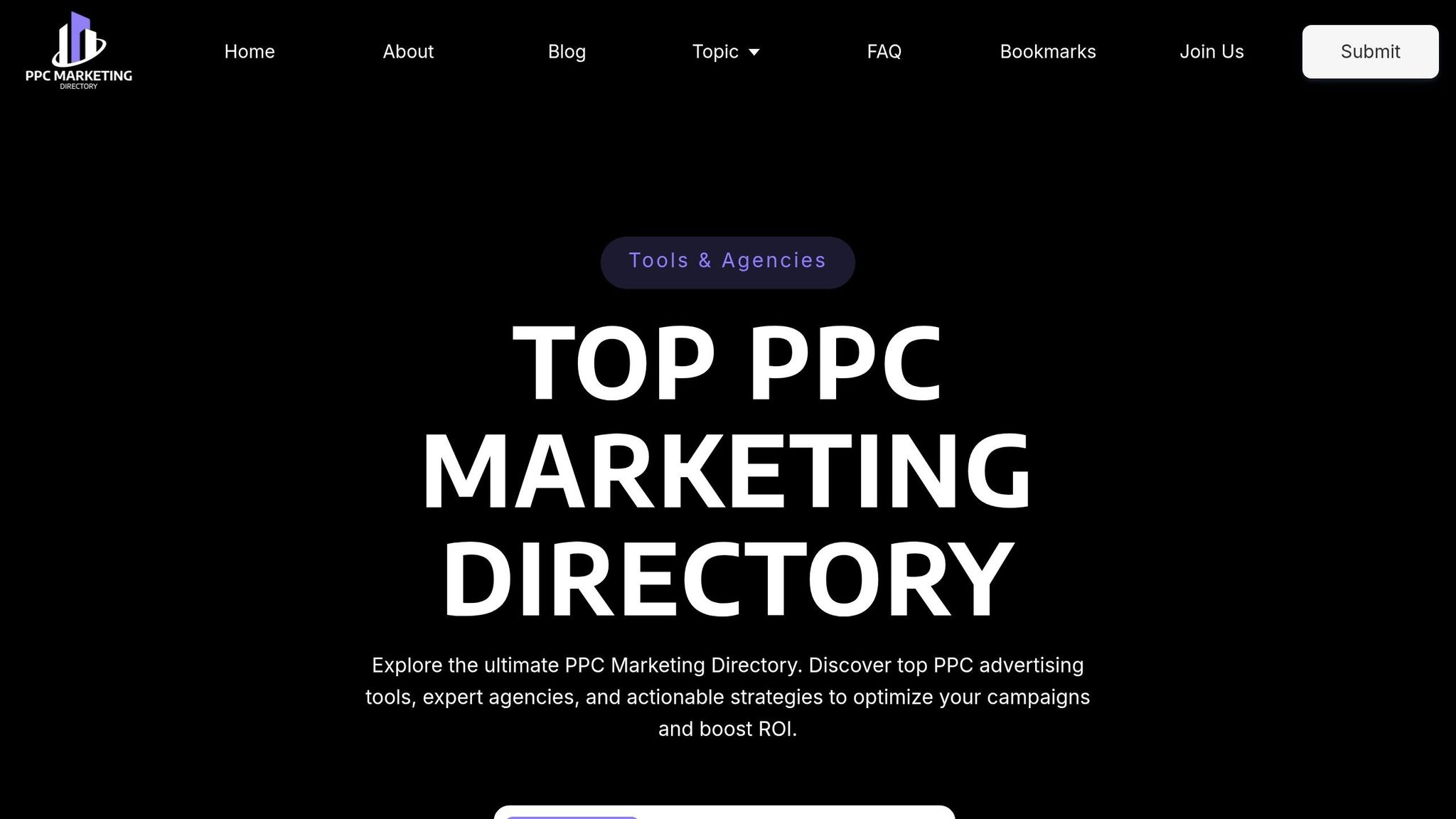
To simplify your search for the perfect tool, check out the Top PPC Marketing Directory. This resource lets you compare vetted PPC tools and agencies across different categories, such as budget management, bid optimization, and performance tracking. Whether you're leaning toward automation or manual strategies, the directory helps you find the ideal match for your needs.
Instead of navigating multiple vendor websites, you can filter tools based on your priorities - like heavy automation, manual planning, click fraud protection, or competitive intelligence. Whether you're a solo operator managing a single account or part of a team handling campaigns across multiple platforms, this directory eliminates the guesswork, ensuring you find a solution that aligns with your workflow.
"AI budget allocation typically has 3–5x more impact on overall performance than bidding optimization alone." - Ryze AI
The right tool can make all the difference, and the directory is designed to help you find it quickly and efficiently.
Conclusion: Picking the Right Budget Allocation Approach
There’s no one-size-fits-all solution here. The best approach depends on factors like the quality of your data, the volume of accounts you manage, and how much control you want. AI can deliver speed and scale, often driving impressive ROAS improvements. On the flip side, manual allocation offers the precision and adaptability needed for niche markets, launching new products, or navigating complex B2B sales cycles.
In 2026, the real key is blending both methods. Combining automation with human oversight can increase ROAS by 35% to 65%. Let AI handle the mechanics - like when and how to allocate budgets - while your team focuses on the strategy: the what and why. This balance ensures fast optimizations without losing the strategic perspective that only people can provide.
"The question isn't whether to use automation - that ship has sailed - but rather how to wield it strategically while maintaining the human expertise that separates exceptional campaigns from mediocre ones." - ALM Corp
Before choosing your approach, make sure your systems are ready. Audit your conversion tracking, integrate offline signals, and set clear budget limits. For AI campaigns, aim for 30–50 conversions per month to give the algorithms enough data to work with. If you’re sticking with manual methods, establish a structured review process driven by data to stay on track.
Finally, ensure you’re equipped with the right tools. The Top PPC Marketing Directory is a great resource, offering filters for budget management, bid optimization, performance tracking, and more. Whether you’re scaling with automation or relying on manual oversight, having the right support makes all the difference.
FAQs
What conversion volume is needed for AI budget allocation to work effectively?
AI-powered budget allocation works best when a campaign achieves at least 30 conversions per month. Falling below this number means the system may not have enough data to optimize effectively, making manual management a better choice in such cases. To get reliable results, it's essential to have accurate conversion tracking and clearly defined goals in place. These elements provide the foundation AI needs to consistently perform.
How do I stop AI from shifting budget to the wrong signals?
To avoid AI mismanaging your budgets, focus on providing accurate, high-quality data and implementing firm safeguards. Start by auditing your data to confirm that conversion tracking reflects genuine business outcomes. Set clear parameters, such as budget caps, restrictions on adjustments, and manual oversight for essential areas. Organize campaigns into categories like intent, discovery, or trust, and allocate budgets based on these groupings to ensure automation supports your overall strategy.
When should I keep budget allocation manual instead of automated?
Manual budget allocation works best when you need tight control over spending, especially for smaller campaigns with monthly budgets ranging from $500 to $5,000. It's also the go-to choice for time-sensitive promotions or industries with strict regulations, like finance or healthcare. If your data or tracking systems aren't reliable, manual control is a safer bet since automation relies on accurate conversion data to prevent wasting your budget.